
Tudor Bronze Guide 2026: Patina, Black Bay Models & Smart Buying Advice

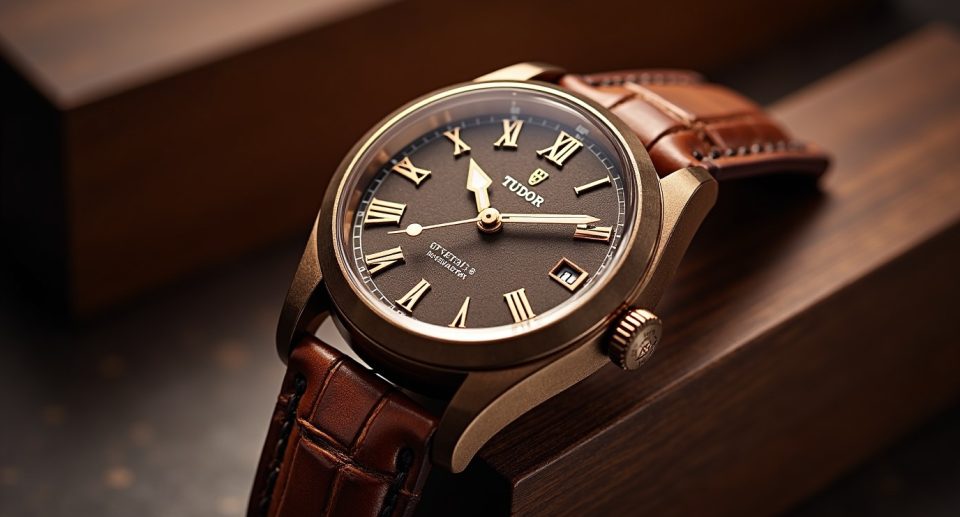

That “Tudor bronze” search drawing 1,000 monthly queries and “Tudor Black Bay Bronze” at 1,600 reveals a collector truth: bronze isn’t just a material. It’s a living finish that transforms daily wear into a personal signature. But with two distinct Black Bay Bronze models (41mm vs. 58’s 39mm), confusion about patina timelines, and skin reaction concerns, buying smart demands clarity. Here’s exactly how Tudor’s aluminum bronze alloy develops its signature patina, which Black Bay Bronze suits your wrist, bracelet realities, and why authenticated pre-owned bronze pieces offer unique value if you understand what you’re buying.
Why Tudor Bronze Is Different: Aluminum Bronze vs. Standard Bronze
Not all bronze watches behave alike. Tudor’s proprietary alloy CuAl (copper-aluminum) deliberately avoids the green “verdigris” associated with ship hulls or statues.
The chemistry matters:
- Standard bronze (CuSn): Copper + tin → develops green patina from copper carbonate formation
- Tudor bronze (CuAl): Copper + aluminum → forms a protective aluminum oxide layer that ages to warm brown/gold tones
Result: Tudor bronze develops a rich, even patina ranging from:
- Light honey gold (3–6 months wear)
- Medium cognac brown (6–12 months)
- Deep chocolate brown (12–24 months+)
Critical note: Patina development varies by wearer’s skin pH, climate, and activity level create unique aging patterns. No two Tudor bronze watches patina identically. This isn’t a flaw, it’s the point.
Tudor Black Bay Bronze vs. Black Bay 58 Bronze: Size Matters
Despite similar names, these are distinct watches designed for different wrists and aesthetics:
| Feature | Black Bay Bronze (Ref. M79250BA) | Black Bay 58 Bronze (Ref. M79010BA) |
| Case Diameter | 43mm | 39mm |
| Lug-to-Lug | 52mm | 48mm |
| Thickness | 14.7mm | 12.7mm |
| Lug Width | 22mm | 20mm |
| Movement | MT5601 (70h power reserve) | MT5400 (70h power reserve) |
| Water Resistance | 200m | 200m |
| Bracelet | Bronze w/ aluminum folding clasp | Bronze w/ aluminum folding clasp |
| Best For Wrist Size | 7″+ circumference | 6.25–7.5″ circumference |
| Style Vibe | Bold, tool-watch presence | Vintage-proportioned, wearable daily |
The wrist reality check:
- Under 6.75″ wrist: 43mm Black Bay Bronze will overhang noticeably, opt for BB58 Bronze
- 6.75–7.5″ wrist: Both work; BB58 wears more elegantly, BB Bronze makes a statement
- Over 7.5″ wrist: 43mm fills the wrist proportionally; BB58 may feel undersized
Collector insight: The BB58 Bronze’s 39mm case revived vintage Tudor Submariner proportions (1958 reference), hence the “58” designation. It’s not a “small men’s watch”; it’s historically accurate sizing.
Patina Development Timeline: What to Expect Month-by-Month
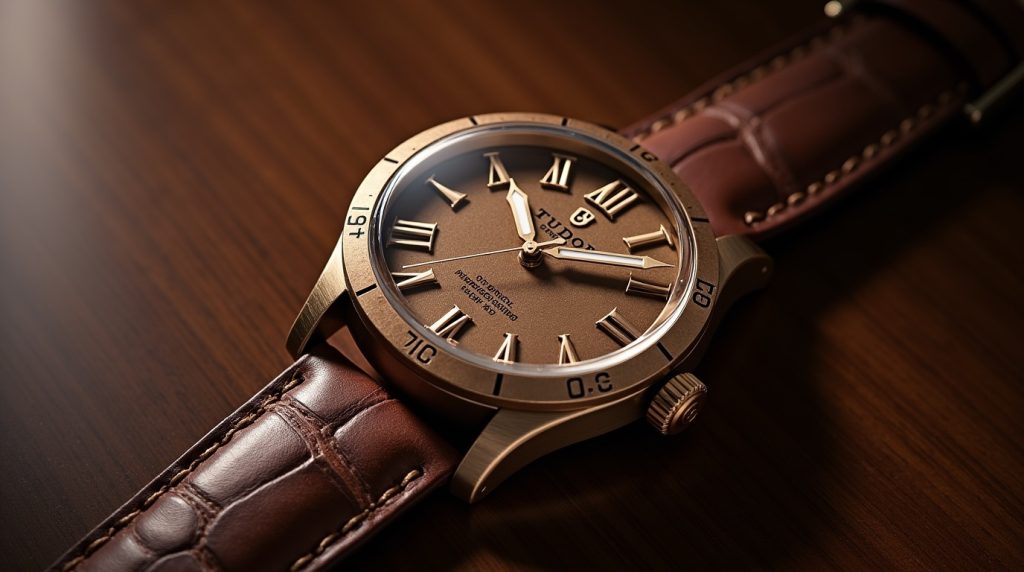
Bronze patina isn’t instant it evolves with wear. Here’s the realistic progression:
| Time Worn | Patina Stage | Appearance | Notes |
| 0–30 days | Fresh | Bright gold-bronze; slight reddish hue | The aluminum oxide layer is beginning to form |
| 1–3 months | Early | Light honey gold; warmer than new | High-sweat areas (caseback contact) darken first |
| 3–6 months | Mid | Medium cognac brown; even tone developing | Bezel edge darkens faster than case sides |
| 6–12 months | Mature | Rich chocolate brown; depth emerges | Unique patterns reflect the wearer’s lifestyle |
| 12+ months | Deep | Dark espresso brown; subtle highlights remain | Patina stabilizes; minimal further change |
Factors accelerating patina:
- High skin acidity (pH <5.5)
- Humid climates (>60% humidity)
- Frequent swimming/sweating
- Minimal cleaning (let oils accumulate)
Factors slowing patina:
- Neutral skin pH (5.5–6.5)
- Dry climates (<40% humidity)
- Regular wiping with a microfiber cloth
- Occasional gentle cleaning with mild soap
Skin reaction warning: ~8% of wearers experience green skin discoloration (harmless but cosmetically undesirable). If this occurs:
- Apply clear nail polish to the caseback interior (temporary barrier)
- Switch to a fabric strap (reduces skin contact)
- Discontinue wear if irritation develops (rare but possible)
Bronze Bracelet Reality: Weight, Wear & Maintenance
Tudor’s bronze bracelet isn’t just aesthetic; it’s functional engineering with tradeoffs:
Weight comparison:
- Bronze bracelet: 168g (BB58) / 182g (BB Bronze)
- Stainless steel equivalent: 142g / 156g
- Fabric strap: 28g
Wear considerations:
- Pros: Develops matching patina with case; no metal-on-metal scratching; hypoallergenic aluminum clasp
- Cons: Heavier than steel; bronze dust transfers to light-colored shirt cuffs initially; requires occasional cleaning to prevent buildup in link crevices
Maintenance essentials:
- Weekly: Wipe with a microfiber cloth after wear to remove skin oils/salt
- Monthly: Soft brush + mild soap to clean between links (prevents patina “streaking”)
- Never: Use polishing cloths or abrasive cleaners, as they strip developing patina unevenly
Bracelet vs. strap debate:
Many owners start on a bronze bracelet to develop initial patina (3–6 months), then switch to Tudor’s “bronze brown” fabric strap to:
- Reduce weight for daily wear
- Prevent further patina acceleration (strap limits skin contact)
- Showcase the developed patina without adding weight
TrueFacet note: Pre-owned bronze pieces often include both bracelet and strap factor this into value assessment.
Caring for Your Bronze Watch: To Patina or Prevent?
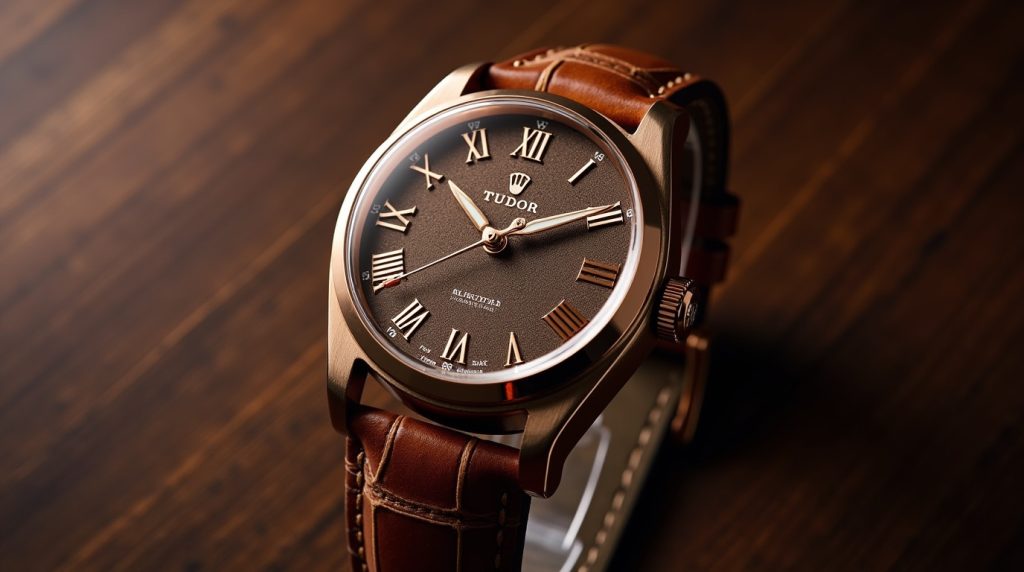
Tudor bronze owners fall into two camps, and both are valid:
Camp 1: Embrace the patina
- Philosophy: “The watch becomes uniquely mine through wear.”
- Practice: Wear daily; minimal cleaning; accept uneven darkening as character
- Result: Rich, personal patina within 6–12 months
Camp 2: Slow the patina
- Philosophy: “I prefer the original warm gold tone.”
- Practice: Wipe after each wear; store in a dry environment; occasional gentle cleaning
- Result: Patina develops slowly over 18–24 months; more even tone
What NOT to do:
- Polish with metal cleaners (removes patina unevenly, creates patchiness)
- Seal with lacquer/clear coat (traps moisture underneath → uneven corrosion)
- Wear only occasionally (intermittent wear creates blotchy patina patterns)
The truth: You cannot stop patina on Tudor bronze, only influence its speed and evenness. Accepting this is key to bronze ownership satisfaction.
Authentication Essentials for Pre-Owned Bronze Pieces
Bronze’s evolving appearance creates unique authentication challenges:
Verify reference number matches caseback:
- BB Bronze: M79250BA-0001 (43mm)
- BB58 Bronze: M79010BA-0001 (39mm)
Check patina consistency:
- Genuine: Even darkening across the case/bracelet with subtle wear patterns
- Red flag: Patchy, blotchy patina suggests chemical acceleration or refinishing
Inspect bracelet links:
- A genuine Tudor bronze bracelet has hollow center links (reduces weight)
- Counterfeits often use solid links → noticeably heavier (200g+)
Movement verification:
- MT5601 (BB Bronze) or MT5400 (BB58) visible through display caseback
- Fake movements lack Tudor’s decorated rotor with “TUDOR” script
Serial number cross-check:
- Laser-etched on inner rehaut (visible through crystal at 6 o’clock)
- Verify against Tudor archives via authorized service center
TrueFacet verification: We document patina stage in Digital Authentication Reports with macro photography, so you know exactly what stage of development you’re buying. No surprises.
Pre-Owned Value Reality: Patina as Premium or Penalty?
Unlike steel watches, where the condition is binary (good/bad), bronze value depends on patina preference:
| Patina Stage | Buyer Appeal | Pre-Owned Premium/Discount* |
| Fresh (0–3 months) | Collectors wanting to develop their own patina | +5–10% over worn examples |
| Mid (6–12 months) | Most desirable—rich but not overly dark | Market standard (0% adjustment) |
| Deep (18+ months) | Niche appeal—some love the darkness, others find it “tired.” | -5–15% unless exceptional evenness |
| Patchy/uneven | Low appeal—suggests improper care or refinishing | -20–40% discount |
*Relative to fresh examples of the same reference/model
Critical insight: A well-patinated bronze with even tone often commands higher prices than a “like new” example because developing perfect patina takes 12+ months of consistent wear. You’re buying time, not just a watch.
Who Should Buy a Tudor Bronze Watch? (And Who Should Skip It)
Ideal for:
- Those who wear watches daily (patina needs consistent wear)
- Collectors who appreciate evolving aesthetics vs. static perfection
- Wrist sizes match case proportions (see size guide above)
- Buyers are comfortable with 8% skin discoloration risk (test with bronze jewelry first)
Skip if:
- You rotate watches frequently (intermittent wear creates blotchy patina)
- You prefer a “as new” appearance long-term
- You have sensitive skin prone to metal reactions
- You want investment-grade value retention (bronze trades 15–25% below steel equivalents)
Style compatibility:
Bronze pairs best with casual/heritage wardrobes denim, field jackets, chukka boots. It clashes with formal business attire (black suits, oxfords). Know your style ecosystem before committing.
Tudor Bronze vs. Competitors: Why Tudor Leads
| Brand | Bronze Alloy | Patina Color | Bracelet Material | Price (Retail) |
| Tudor | CuAl (aluminum bronze) | Warm brown/gold | Bronze + aluminum clasp | $4,100 |
| Panerai | CuSn (standard bronze) | Greenish-brown | Leather/fabric only | $8,900+ |
| Zelos | CuAl + nickel | Dark brown | Bronze | $600–$900 |
| Baltic | CuSn | Green-tinged brown | Leather only | $650 |
Why Tudor stands apart:
- Only luxury brand offering a full bronze bracelet (not just case)
- Aluminum bronze avoids green tones that divide collectors
- Rolex-owned manufacturing ensures movement reliability (MT56xx series)
- Strong pre-owned liquidity (unlike microbrands with limited resale markets)
Your Bronze Buying Checklist
Before purchasing a pre-owned Tudor bronze:
☐ Confirmed reference number matches desired model (BB vs. BB58)
☐ Verified wrist size compatibility with case dimensions
☐ Inspected patina for evenness (avoid patchy/blotchy examples)
☐ Checked bracelet for hollow links (authentic weight ~170g)
☐ Verified movement caliber through display caseback
☐ Tested clasp function (aluminum clasps can seize if neglected)
☐ Confirmed no green skin reaction during trial wear (if possible)
☐ Reviewed service history, bronze requires the same movement service as steel
Conclusion: Bronze Is a Commitment—Not a Compromise
Tudor bronze watches aren’t for everyone. They demand daily wear to develop properly, accept skin chemistry variables, and embrace change as a virtue. But for those who understand this contract, bronze delivers something no steel watch can: a timepiece that becomes yours uniquely through the simple act of living with it.
The patina isn’t deterioration, it’s documentation. Each shade of brown records beach vacations, office deadlines, mountain hikes. After two years, your Tudor bronze won’t look like the one in the boutique. It will look like your life, and that’s the rarest luxury of all.
And for pre-owned buyers: authenticated bronze pieces with developed patina offer immediate character without the 12-month wait. Just ensure authentication verifies genuine Tudor alloy, not aftermarket refinishing. Because real patina can’t be faked, it can only be earned.