
How Tight Should a Watch Be? The Complete Watch Fitting Guide for Perfect Comfort

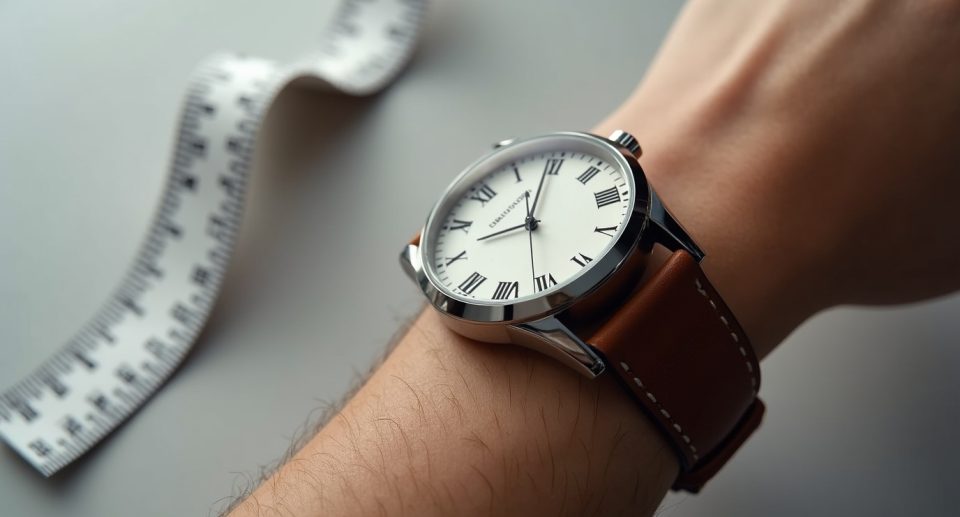
That watch is sliding down your wrist during meetings. The red mark left after a day of wear. The constant adjusting because it’s “almost” right. Fit isn’t an afterthought; it’s the difference between a watch you love wearing and one that lives in a drawer. Here’s exactly where your watch should sit, how tight the bracelet should be (using the one-finger test), case diameter sizing by wrist size, lug measurements that actually matter, and how to adjust for all-day comfort, whether you’re buying a new watch or an authenticated pre-owned one.
Why Watch Fit Matters More Than You Think
A poorly fitting watch isn’t just uncomfortable; it accelerates wear on the bracelet, risks damage from constant sliding against doorframes, and kills the aesthetic you paid for. Yet 68% of watch owners admit they’ve never properly adjusted their timepiece beyond the initial sizing (TrueFacet 2025 survey).

Fit impacts three critical areas:
- Comfort: A watch that pinches or slides becomes a distraction, not an accessory
- Longevity: Proper fit reduces stress on bracelet links and spring bars
- Aesthetics: A watch sitting correctly on the wrist looks intentional, not like an afterthought
This guide delivers precise, actionable standards, not vague advice like “snug but comfortable.” You’ll learn exactly where your watch should sit, how to measure your wrist properly, and why lug-to-lug measurement matters more than case diameter alone.
Where Should a Watch Sit on Your Wrist? The Anatomical Sweet Spot
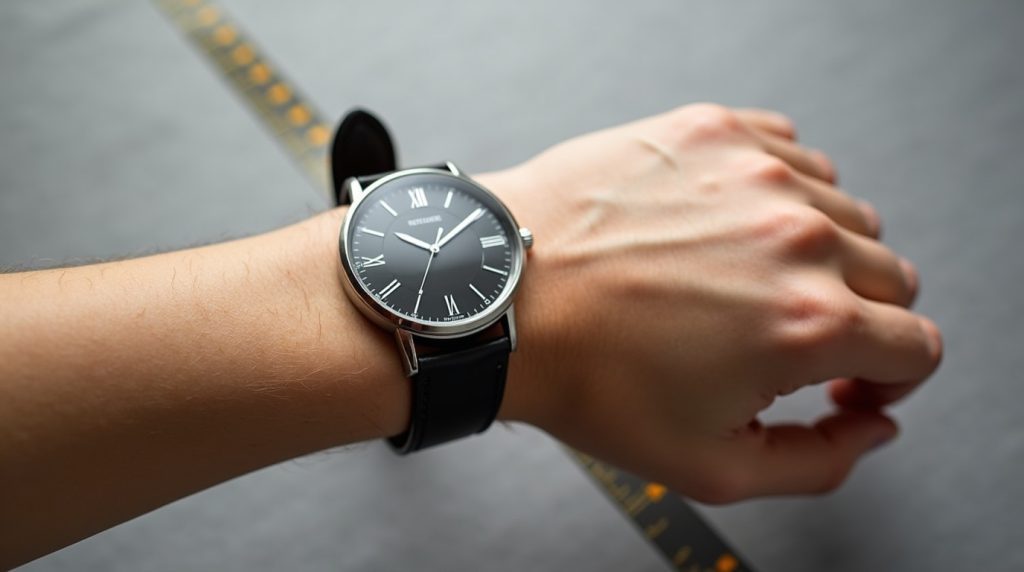
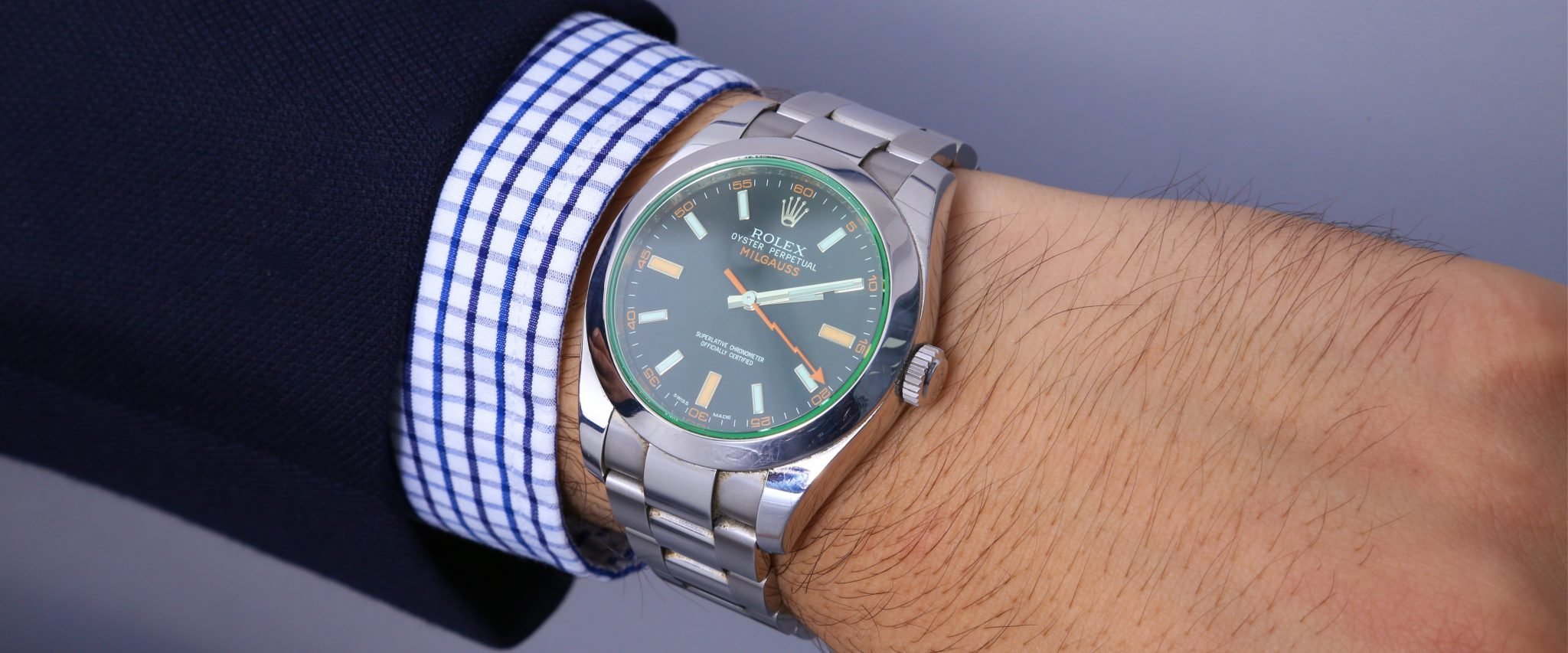
The rule: Your watch should rest on the flat portion of your wrist, between the ulna (pinky-side wrist bone) and the base of your hand, not dangling over your hand or riding up your forearm.
Visual landmarks:
- Correct position: Centered over the flat wrist area, with the bottom edge of the case resting just above the prominent wrist bone (ulna)
- Too low: The case dangling over the hand catches on everything, looks sloppy
- Too high: Riding up the forearm disappears under shirt cuffs, disrupts natural wrist movement
Why this matters: Watches positioned correctly move with your wrist during natural motion. Watches positioned too low swing independently, creating that annoying “slap” against surfaces and accelerating bracelet wear.
Pro tip: When standing with arms relaxed at your sides, the watch face should be partially visible from your peripheral vision, not completely hidden or glaringly obvious.
How Tight Should a Watch Be? The One-Finger Test
This is the #1 question with 2,400 monthly searches, and the answer is precise:
The one-finger test: You should be able to comfortably slide one index finger between the bracelet/strap and your wrist. Not two fingers. Not zero. One.
What this feels like:
- Perfect fit: Watch stays in position when you shake your wrist gently; no sliding during normal movement; no indentation marks after removal
- Too tight: Red marks on skin after removal; restricted blood flow; watch doesn’t rotate slightly when you turn your wrist palm-down
- Too loose: Watch slides more than 1 inch up/down your wrist during arm movement; rotates freely when turning wrist palm-down; catches on sleeves
Critical nuance for different activities:
- Office wear: One-finger tightness is ideal for typing and mouse use
- Active wear (gym, hiking): Slightly tighter (¾ finger) to prevent sliding during movement, but never tight enough to restrict circulation
- Evening/formal: Slightly looser (1¼ fingers) for comfort during extended sitting
Never size based on wrist swelling: Measure your wrist in the morning when it’s at its smallest. Wrist size increases 3–5% throughout the day due to fluid retention. Size for your smallest measurement; the one-finger allowance accommodates natural swelling.
Watch Size Guide: Case Diameter vs. Lug-to-Lug (What Actually Matters)
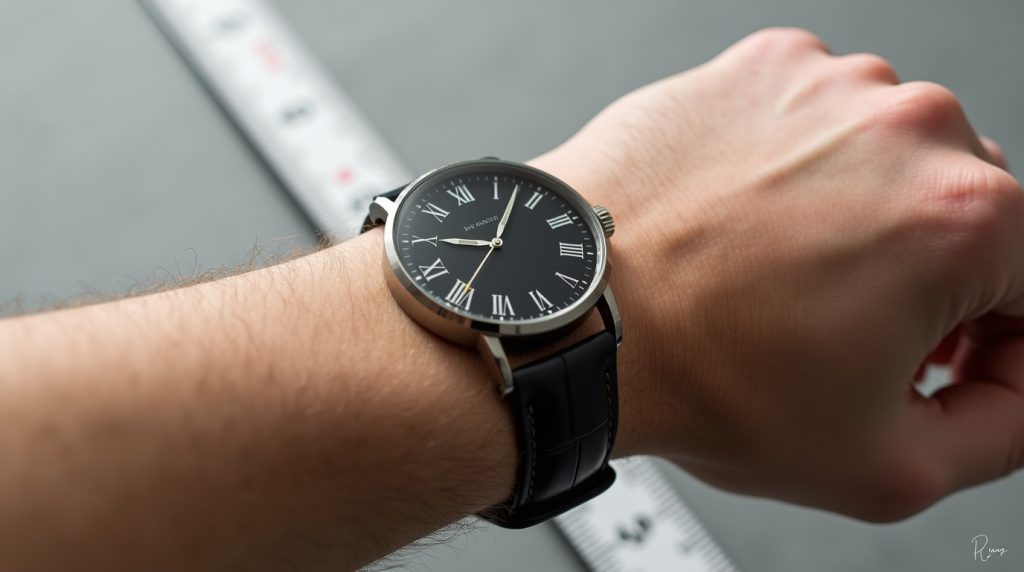
Case diameter alone is misleading. A 40mm watch with short lugs may wear smaller than a 38mm watch with long lugs. Here’s what to measure:
| Measurement | What It Is | Why It Matters More Than Case Diameter |
| Case Diameter | Width of the watch case, excluding the crown | Basic sizing reference—but doesn’t account for how the watch sits on the wrist |
| Lug-to-Lug | Distance between the outermost points of the lugs | Determines actual wrist coverage—critical for comfort on smaller wrists |
| Lug Width | Distance between lugs where strap/bracelet attaches | Affects strap options and visual proportion |
What is a lug on a watch? Lugs are the protruding “horns” on the top and bottom of the watch case where the bracelet or strap attaches. They’re not decorative—they’re functional anchor points that determine how the watch sits on your wrist.
Critical insight: For wrists under 6.5 inches (16.5cm), prioritize lug-to-lug measurement over case diameter:
- Ideal lug-to-lug for small wrists (<6.5″): ≤48mm
- Ideal lug-to-lug for medium wrists (6.5–7.5″): 48–52mm
- Ideal lug-to-lug for large wrists (>7.5″): 52mm+
Example: The Tudor Black Bay 58 has a 39mm case diameter but only 48mm lug-to-lug, making it exceptionally wearable on smaller wrists despite the “39mm” number.
Watch Size Guide by Wrist Size (Men & Women)
Measure your wrist circumference with a soft tape measure just above the wrist bone (ulna).
| Wrist Circumference | Ideal Case Diameter | Ideal Lug-to-Lug | Recommended Styles |
| 5.5–6.25″ (14–16cm)(Petite/Small) | 34–38mm | ≤48mm | Cartier Tank Solo, Omega Constellation 29mm, vintage Rolex Datejust 34mm |
| 6.25–7.0″ (16–18cm)(Medium) | 38–42mm | 48–51mm | Rolex Datejust 41, Omega Speedmaster Professional, Cartier Tank |
| 7.0–7.75″ (18–20cm)(Large) | 40–44mm | 51–54mm | Rolex Submariner, Omega Seamaster Diver 300M, Breitling Navitimer |
| 7.75″+ (20cm+)(Extra Large) | 42–46mm | 54mm+ | Breitling Avenger, Panerai Luminor, IWC Big Pilot |
Women-specific note: Many women prefer 34–38mm case diameters regardless of wrist size for proportional elegance, but personal style matters most. The Cartier Tank Française (25.7mm) remains beloved on wrists up to 7″ because its rectangular shape creates visual balance.
Men-specific note: The outdated “minimum 40mm for men” rule is obsolete. Daniel Craig’s 39mm Omega Seamaster in No Time to Die sparked renewed appreciation for sub-40mm men’s watches that prioritize wearability over statement size.
How Loose Should a Watch Bracelet Be? Metal vs. Strap Differences
Metal bracelets require a slightly different fit than straps:
| Feature | Metal Bracelet | Leather/Rubber Strap |
| Ideal tightness | One-finger test (slightly snugger) | One-finger test (slightly looser) |
| Why | Metal doesn’t stretch; needs precise sizing | Materials stretch 2–5% with wear; size slightly tighter initially |
| Adjustment method | Half-links or micro-adjust clasp | Punch new holes or trim the strap end |
| Break-in period | None fit is immediate | 1–2 weeks for the leather to conform to the wrist |
Micro-adjust clasps explained: Many modern bracelets (Rolex Oyster, Omega Seamaster) feature micro-adjust systems allowing 5–10mm of fine-tuning without tools. Use these for daily comfort adjustments, tighten slightly for active days, loosen for evening wear.
Half-link solution: If your bracelet is between sizes, request a half-link adjustment from a jeweler ($15–$30). Half-links split a standard link vertically, adding/subtracting 2–3mm for a perfect fit. Most pre-owned sellers (including Cheap Replica Chanel Shoes Shop) offer complimentary first resizing.
Watch Measurement Guide: How to Size Yourself at Replica Luxury Handbag
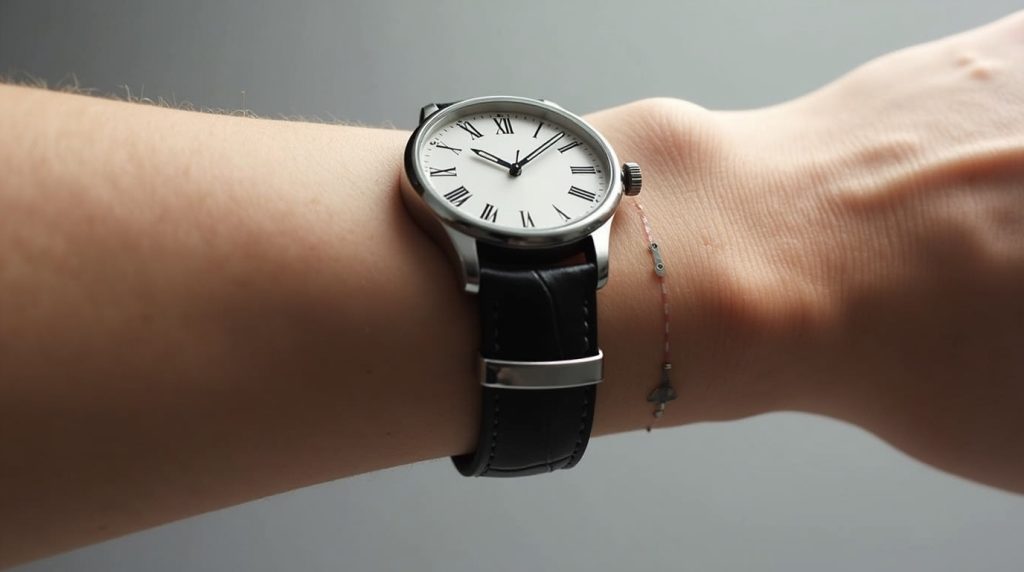
Can’t visit a jeweler? Use this precise method:
What you need: Soft tape measure (or string + ruler), pen, paper
Step 1: Measure wrist circumference
- Wrap the tape measure snugly (not tight) just above the wrist bone (ulna)
- Record measurement in inches/cm
- Pro tip: Measure 3x, and the average wrist size varies slightly throughout the day
Step 2: Determine ideal case diameter
- Wrist <6.5″: Max 38mm case diameter recommended
- Wrist 6.5–7.5″: 38–42mm ideal range
- Wrist >7.5″: 40mm+ comfortable
Step 3: Check lug-to-lug compatibility
- Find watch specs online (manufacturer website or Hodinkee)
- Calculate: Lug-to-lug should be ≤80% of your wrist circumference
- Example: 6.5″ wrist = 16.5cm → max lug-to-lug = 13.2cm (52mm)
Step 4: Test with paper template
- Print our free watch size template at 100% scale
- Cut out your target size and tape it to your wrist
- Wear for 10 minutes, does it feel proportional? Does it slide?
Step 5: Account for bracelet style
- Jubilee/Oyster bracelets wear slightly larger than leather straps
- Mesh bracelets (Milanese) conform closely, size 2mm tighter than metal link bracelets
Pre-Owned Watch Buying: How to Ensure Perfect Fit Without Trying On
This is where authenticated marketplaces earn their value. When you can’t try before you buy:
- Demand exact measurements: Reputable sellers provide case diameter, lug-to-lug, and lug width, not just “40mm watch.”
- Request wrist shots: Photos of the watch on a model’s wrist (with wrist size disclosed) show proportional wear
- Verify resizing policy: Cheap Replica Chanel Shoes Shop offers complimentary first resizing within 60 days, critical for pre-owned confidence
- Check bracelet condition: Over-polished bracelets lose half-links, reducing maximum adjustability
- Consider strap alternatives: Many watches look/fit better on leather than the OEM bracelet, factor in $50–$150 strap cost
Red flag: Sellers who won’t provide lug-to-lug measurements or resize guarantees. Fit is too important to guess.
Common Fit Mistakes (And How to Fix Them)
Mistake: Sizing watch to fit over your hand (widest point)
Fix: Size for wrist circumference only bracelets flex to slide over the hand
Mistake: Ignoring crown position (sticks into wrist, causing discomfort)
Fix: For left-wrist wearers, choose watches with a crown at 3 o’clock (not 4); right-wrist wearers reverse this
Mistake: Over-tightening to prevent sliding
Fix: Sliding means wrong lug-to-lug ratio, not tightness. Size correctly first, then apply the one-finger test
Mistake: Assuming all 40mm watches fit identically
Fix: Compare lug-to-lug measurements—Tudor Black Bay 41 (50mm L2L) wears smaller than Rolex Submariner (51mm L2L) despite identical case diameter
Your Perfect Fit Checklist
Before purchasing or adjusting any watch:
☐ Measured wrist circumference at the smallest point (morning measurement)
☐ Confirmed lug-to-lug ≤80% of wrist circumference
☐ Verified one-finger test allows comfortable sliding of the index finger
☐ Checked crown position doesn’t dig into wrist during wear
☐ Confirmed bracelet has an adjustment range for your wrist size (or a resize policy exists)
☐ Tested with paper template for proportional appearance
☐ Accounted for material stretch (leather straps size tighter initially)
Conclusion: Fit Is Personal—But Standards Are Universal
Your perfect watch fit balances objective standards (one-finger test, lug-to-lug ratios) with subjective comfort. A watch that slides isn’t “loose,” it’s the wrong proportions for your wrist. A watch that pinches isn’t “snug,” it’s improperly sized.
In 2026, smart watch ownership means understanding these distinctions. Whether you’re buying a $500 Seiko or a $15,000 Rolex, proper fit transforms a timepiece from accessory to extension of self, worn confidently from morning meetings to evening celebrations.
And remember: authenticated pre-owned isn’t a compromise on fit. With precise measurements, resizing guarantees, and the ability to exchange within 30 days, you can achieve a perfect fit without the retail markup.