Chronograph vs Chronometer: Meaning, Differences, and How Chronographs Work on Watches in 2026

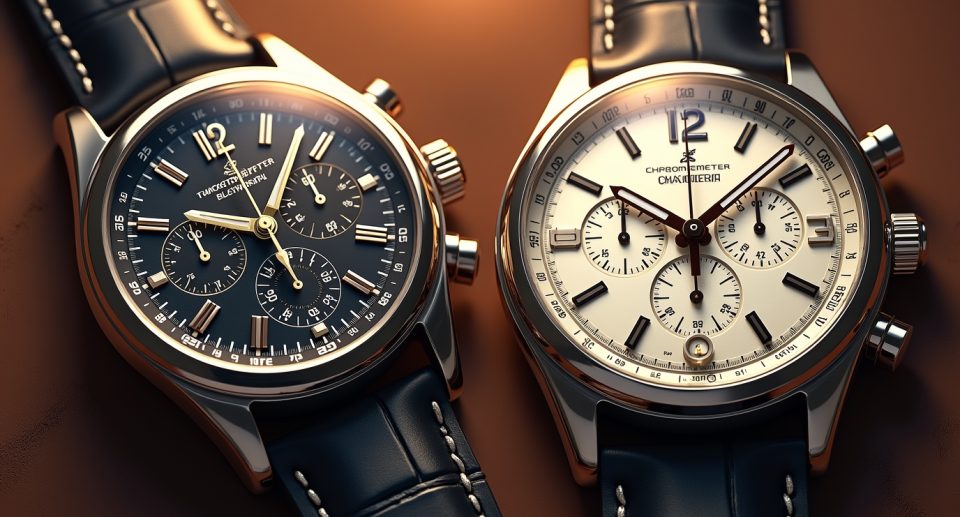

In the world of horology, the terms “chronograph” and “chronometer” are frequently mixed up due to their similar-sounding names and shared Greek root “chrono” (meaning time). However, they refer to completely different concepts: one is a complication (extra function), while the other is a certification for exceptional accuracy.
This guide breaks down the definitions, functions, key differences, and real-world examples to help you understand both clearly—especially useful for collectors, buyers, or anyone curious about watch terminology.
Introduction to “Chrono” Terms in Watches
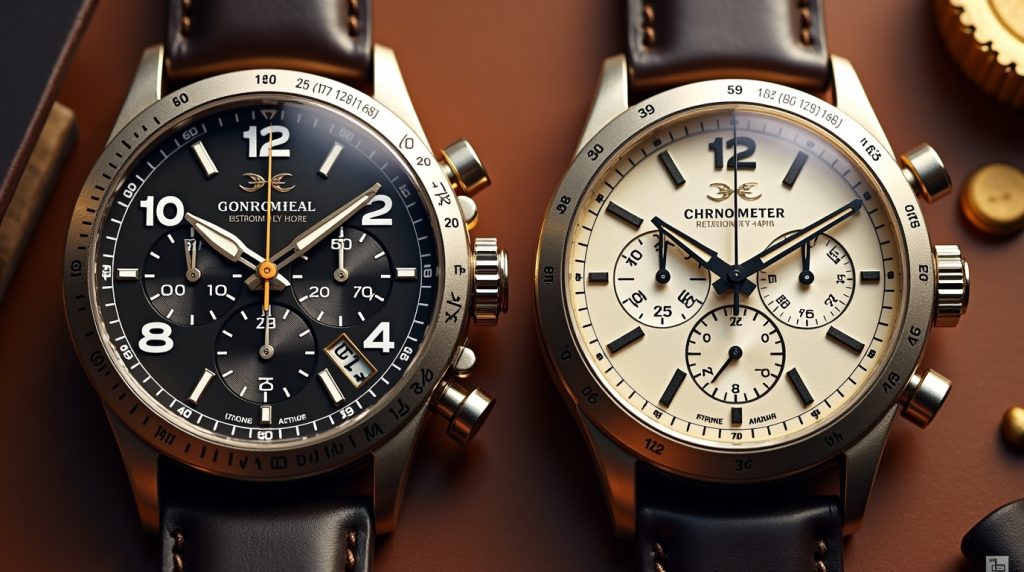
The prefix “chrono” comes from the ancient Greek word khronos, meaning time. It appears in many watch-related terms, leading to confusion. A chronograph is a timing tool (stopwatch feature), while a chronometer designates proven precision. Many modern luxury watches combine both—e.g., a chronograph movement that is also chronometer-certified—but they are not the same thing.
What Does “Chrono” Mean?
“Chrono” simply means time. In watchmaking:
- Chronograph = “time writer” or recorder (a device that measures and “writes” elapsed time).
- Chronometer = high-precision timekeeper (historically tested for accuracy).
- Other uses: Chronograph function (stopwatch), chronograph watch (watch with this feature).
This root explains why people ask “what does chrono mean” or “chrono meaning”—it’s the foundation of both terms.
Chronograph Meaning and Function
A chronograph is a watch with an integrated stopwatch function, allowing you to measure elapsed time intervals while still displaying regular time.
What is a chronograph function in a watch? / What does the chronograph on a watch do?
- It starts, stops, and resets a separate timing mechanism.
- Most feature pushers (usually at 2 and 4 o’clock) to control it:
- Top pusher: Start/stop.
- Bottom pusher: Reset to zero.
- Sub-dials (subsidiary dials) track elapsed minutes (often 30 or 60), hours (up to 12), and sometimes running seconds.
- The central seconds hand often doubles as the chronograph hand (sweeping for precision).
Types of chronographs:
- Standard/Simple: Basic start/stop/reset.
- Flyback: Reset and restart instantly with one push (useful for pilots/racing).
- Split-seconds (Rattrapante): Two central seconds hands for timing multiple events.
Chronographs are popular for sports, aviation, racing, and everyday timing (e.g., cooking, workouts).
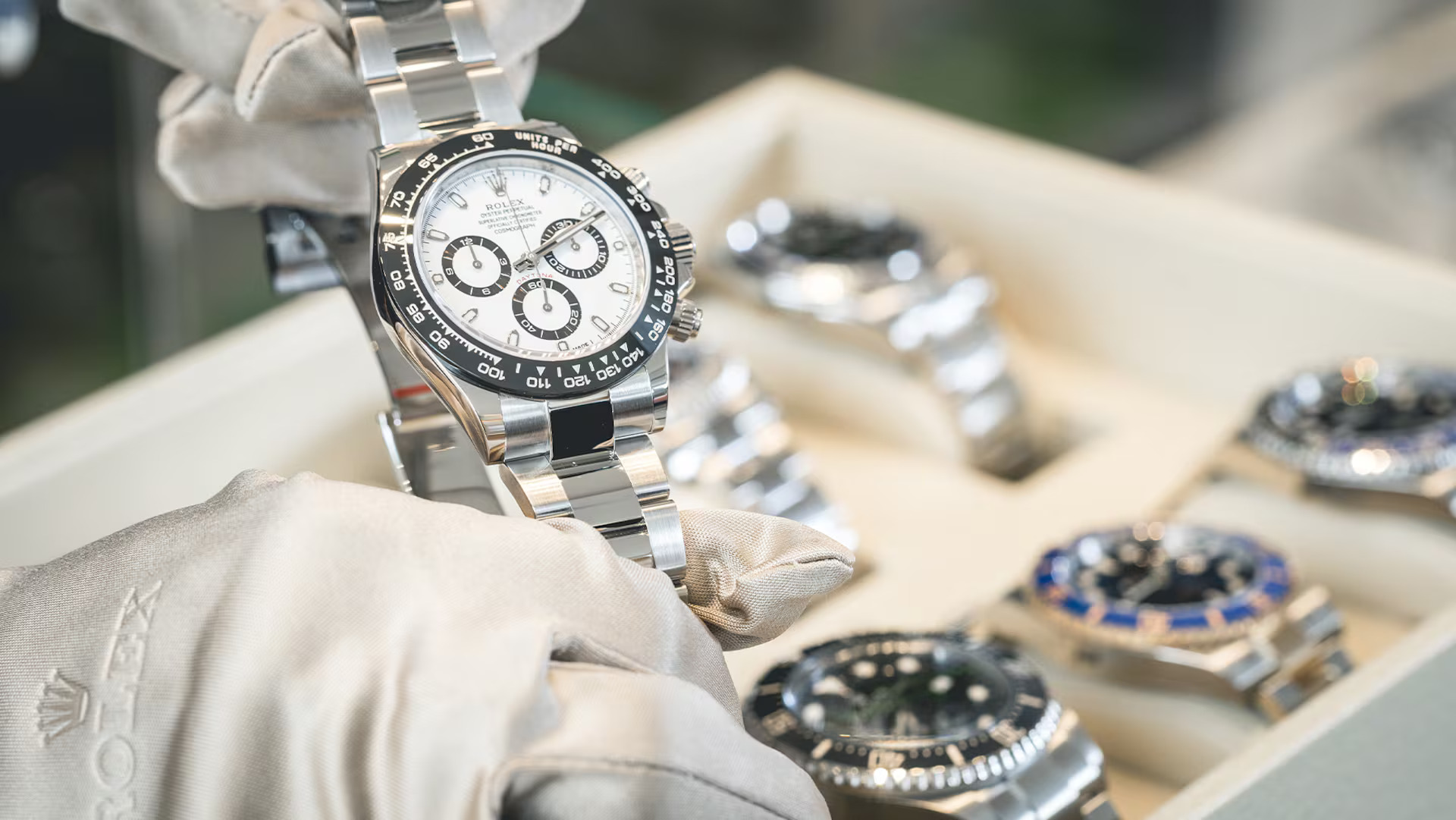
Here are labeled examples of classic chronograph watches showing sub-dials and pushers:
Close-ups of chronograph pushers and sub-dials in action on iconic models.
Chronometer Meaning and Certification
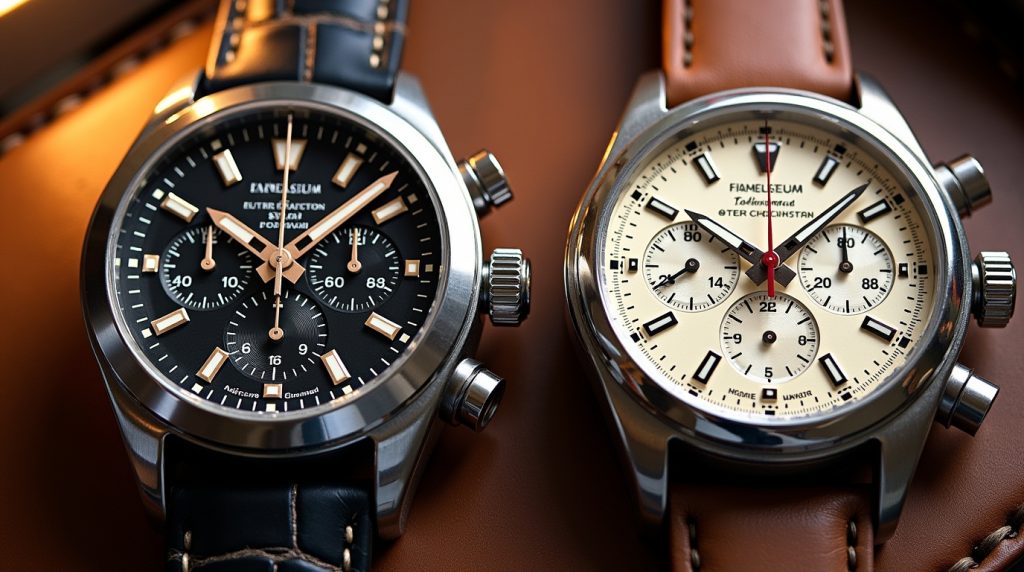
A chronometer is a timepiece (usually mechanical) that has passed rigorous, independent accuracy tests and received official certification.
What is a chronometer? / Define chronometer / Chronometer meaning:
- It must maintain exceptional precision under varying conditions (positions, temperatures).
- The most common certification is COSC (Contrôle Officiel Suisse des Chronomètres) in Switzerland:
- Tested for 15 days in 5 positions and 3 temperatures.
- Average daily rate: -4 to +6 seconds per day (though many perform better).
- ISO 3159 standard.
Modern evolutions in 2026:
- METAS Master Chronometer (Omega): Tests the fully assembled watch (including case), adds anti-magnetic resistance (up to 15,000 gauss), power reserve verification, and stricter accuracy (0/+5 seconds per day). Requires COSC first.
- Rolex Superlative Chronometer: In-house, -2/+2 seconds per day on the finished watch.
- Emerging Super-COSC (proposed/rolling out in 2026): Enhanced COSC for real-world wear, tighter accuracy, and full-watch testing.
Chronometer status proves reliability—ideal for those prioritizing consistent timekeeping.
Examples of COSC-certified chronometer movements (often visible via exhibition casebacks):
Chronograph vs Chronometer: Key Differences
| Aspect | Chronograph | Chronometer |
| Primary Purpose | Measures elapsed time (stopwatch) | Exceptional timekeeping accuracy |
| Type | Complication/function | Certification/standard |
| Key Feature | Pushers, sub-dials, central chrono hand | Strict testing (COSC, METAS, etc.) |
| Accuracy Focus | Not inherently precise unless certified | Defined by daily rate tolerance |
| Can it be both? | Yes—many chronographs are chronometer-certified | Yes—a chronometer can have chronograph function |
| Examples | Omega Speedmaster, Rolex Daytona | Rolex Oyster Perpetual (non-chrono), certified Speedmaster |
A chronograph is not automatically a chronometer, and vice versa—but combining them creates high-performance watches.
Famous examples of chronograph chronometer watches:
- Omega Speedmaster Professional (Moonwatch) – Many versions COSC-certified.
- Rolex Daytona – COSC chronometer with chronograph function.
- Breitling Navitimer – Often certified.
- Zenith Chronomaster – High-beat chronograph with chronometer precision.
Are Chronograph Watches Automatic?
No, not necessarily. Chronographs come in various movement types:
- Automatic (self-winding): Most popular modern chronographs (e.g., Rolex Daytona, Omega Speedmaster). Rotor winds via wrist motion; convenient for daily wear.
- Manual-wind: Requires hand-winding (e.g., some vintage or purist pieces like certain Zenith El Primero).
- Quartz: Battery-powered, highly accurate, simpler chronograph (e.g., affordable TAG Heuer or Citizen models).
- Hybrid: Rare, like Grand Seiko Spring Drive chronographs.
Automatic chronographs are complex (more parts = higher cost/maintenance), but they offer the satisfying sweep and no-battery convenience. Quartz versions excel in precision and affordability.
Practical Buying Guidance: Matching Features to Real Needs
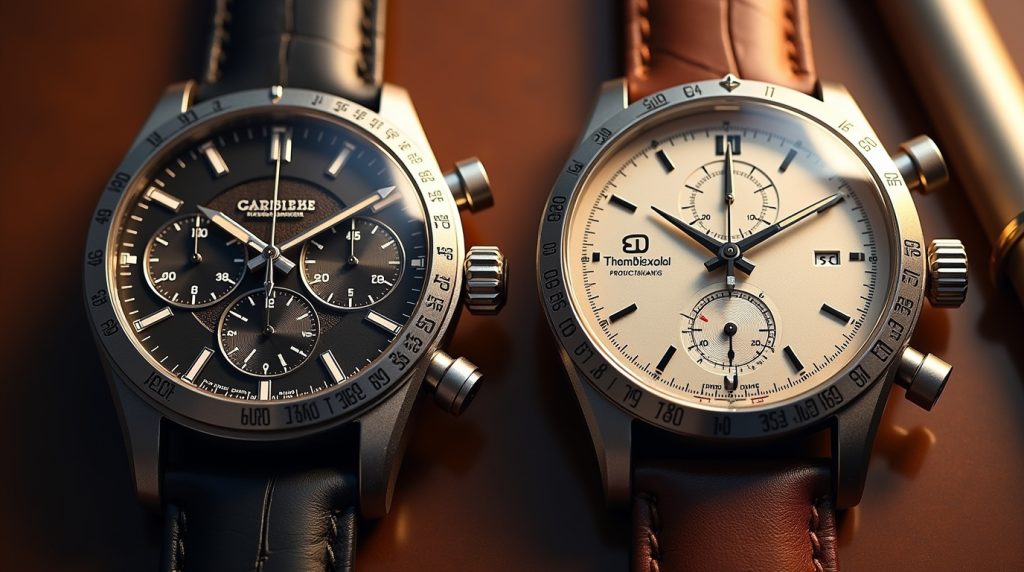
Before paying premiums for either feature, ask brutally honest questions:
Do You Actually Need a Chronograph?
Answer “yes” only if you’ll use the stopwatch function at least weekly. Chronographs introduce trade-offs:
- Thicker cases – Extra mechanism layers add 1.5–3mm to case thickness
- Heavier weight – Additional components increase mass noticeably
- Higher service costs – $600–$1,000 for chronograph service vs. $400–$700 for time-only
- Reduced legibility – Subdials and extra hands complicate quick time reading
If you want the aesthetic but rarely time intervals, consider a “pulsometer” or “tachymeter” bezel on a non-chronograph watch—decorative scales without mechanical complexity.
Does Chronometer Certification Matter for You?
Chronometer certification justifies its premium only if:
- You work in fields requiring precise timekeeping without smartphone reliance (aviation, maritime navigation, scientific fieldwork)
- You derive satisfaction from mechanical precision as a philosophical pursuit
- You plan to keep the watch long-term and value consistent performance
For most buyers checking time against network-synced devices, the difference between ±5 and ±10 seconds daily is functionally irrelevant. Save the premium for finishing quality or brand heritage that brings you joy.
Automatic vs. Quartz Chronographs: The Uncomfortable Truth
Marketing celebrates mechanical chronographs, but quartz versions solve real problems:
- Battery life: Modern quartz chronographs run 2–3 years even with frequent stopwatch use
- Accuracy during timing: Quartz movements maintain perfect rhythm while timing; mechanical chronographs may lose/gain seconds during extended timing sessions
- Affordability: Quality quartz chronographs (Citizen, Seiko) start under $300; mechanical equivalents begin around $1,500
Choose mechanical for emotional engagement with engineering artistry. Choose quartz for utilitarian reliability. Neither choice is “wrong”—but pretending quartz chronographs are inferior ignores their genuine advantages for specific use cases.
Red Flags in Listings
Protect yourself from terminology misuse:
- ❌ “Chronometer” used to describe any watch with subdials → Seller conflating terms
- ❌ “COSC certified” without certification number on caseback → Unverifiable claim
- ❌ Chronograph advertised as “ultra-thin” under 12mm → Likely missing essential components or using fragile architecture
- ✅ Legitimate chronometer: Dial text “Chronometer” + caseback engraving with unique certification number
- ✅ Legitimate chronograph: Functional pushers that start/stop/reset independently from crown operation
Care & Longevity Considerations
Owning these features responsibly requires understanding their maintenance realities.
Chronograph-Specific Practices
- Never leave the chronograph running continuously – Drains power reserve 30–40% faster and accelerates wear on clutch components
- Reset before storing – Returns mechanism to neutral position, reducing spring tension during inactivity
- Service every 4–5 years – Complex chronograph movements require more frequent attention than time-only calibers
- Avoid activating pushers underwater – Even on dive-rated chronographs; pressure can force water past pusher gaskets during actuation
Chronometer Care Realities
- Magnetism is the silent killer – Modern environments (laptops, tablets, handbag clasps) expose watches to magnetic fields that disrupt balance springs. Chronometer-rated movements often include silicon parts for resistance, but no mechanical movement is fully immune.
- Positional variance is normal – A chronometer may run +3 sec/day dial up but -2 sec/day crown down. Average daily rate matters more than any single position.
- Re-certification isn’t practical – After servicing, movements rarely undergo re-testing. Trust your watchmaker’s regulation work rather than expecting renewed certification.
Iconic Examples That Illustrate the Difference
Concrete examples cement understanding:
- Chronograph Only: Breitling Navitimer (non-certified variants). Aviation-focused with slide-rule bezel and robust chronograph function—but Breitling historically prioritized functionality over COSC certification on base models. Perfect for pilots needing reliable timing without precision obsession.
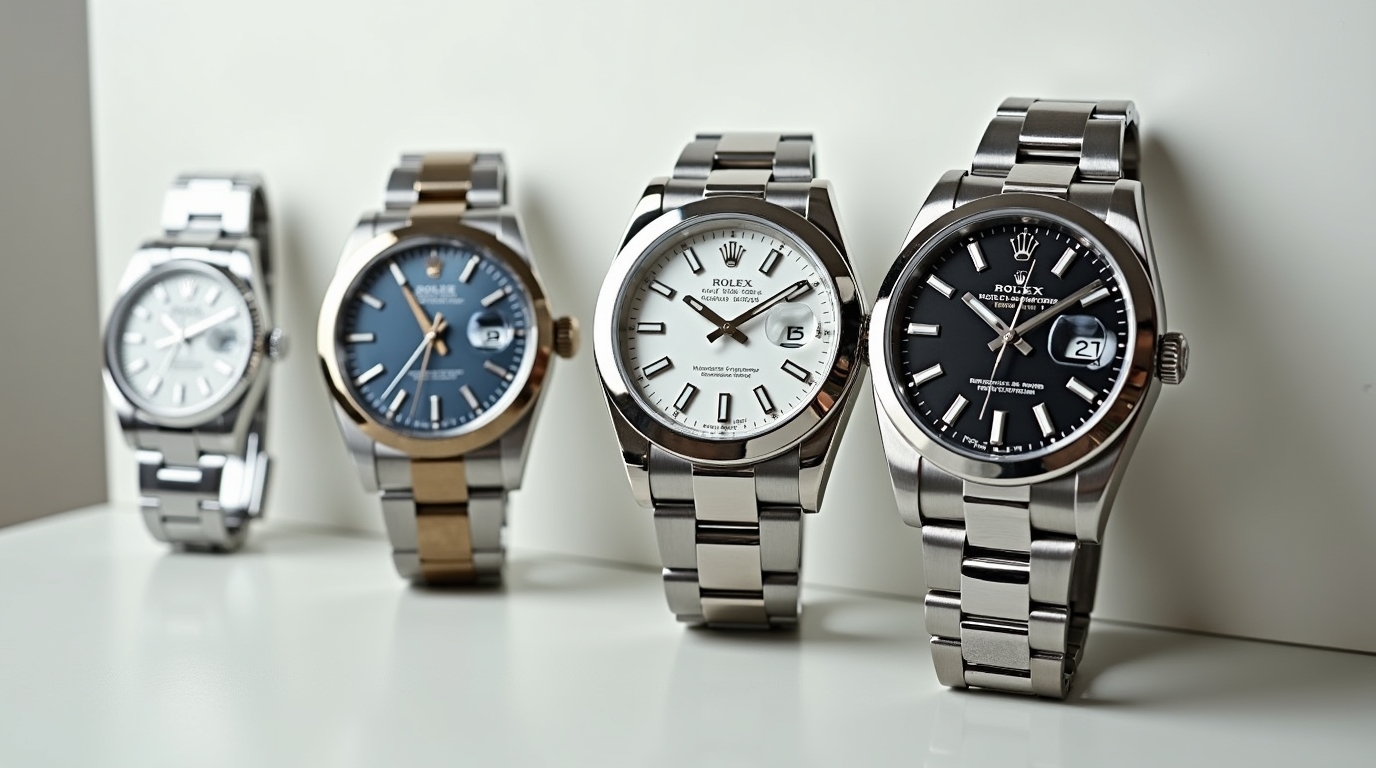
- Chronometer Only: Rolex Datejust 41 (ref. 126334). Superlative Chronometer certified to -2/+2 sec/day with flawless timekeeping—but no stopwatch function whatsoever. Ideal for professionals wanting discreet precision without sporty aesthetics.
- Both Combined: Omega Speedmaster Professional Moonwatch (ref. 311.30.42.30.01.005). COSC-certified chronograph that actually went to the moon. Represents the pinnacle of functional chronograph engineering meeting precision standards—a legitimate dual-threat timepiece.
- The Misleading Case: Many vintage Heuer chronographs carry “Chronometer” text on dials referring to chronograph function—not certification. Pre-1970s terminology was looser. Modern buyers must verify actual COSC certification via movement inspection, not dial text alone.
Conclusion: Choosing Between Chronograph and Chronometer Features
If you need to time events (racing laps, cooking, workouts), go for a chronograph—its stopwatch function adds versatility and visual appeal with sub-dials and pushers.
If absolute accuracy matters most (daily reliability, investment-grade precision), prioritize chronometer certification—whether COSC, METAS, or Superlative.
Many enthusiasts choose both: a chronograph that is also chronometer-certified delivers the best of timing utility and rock-solid performance.
In 2026, with advancements like Super-COSC and stronger anti-magnetic standards, chronometer certifications are more relevant than ever. Explore iconic pieces like the Omega Speedmaster or Rolex Daytona to experience both worlds.
Now you’re equipped to speak confidently about these terms—happy watch hunting!