Luxury Watch Glossary: The Ultimate Comprehensive Guide to Horology Terms, Anatomy, Movements & Complications

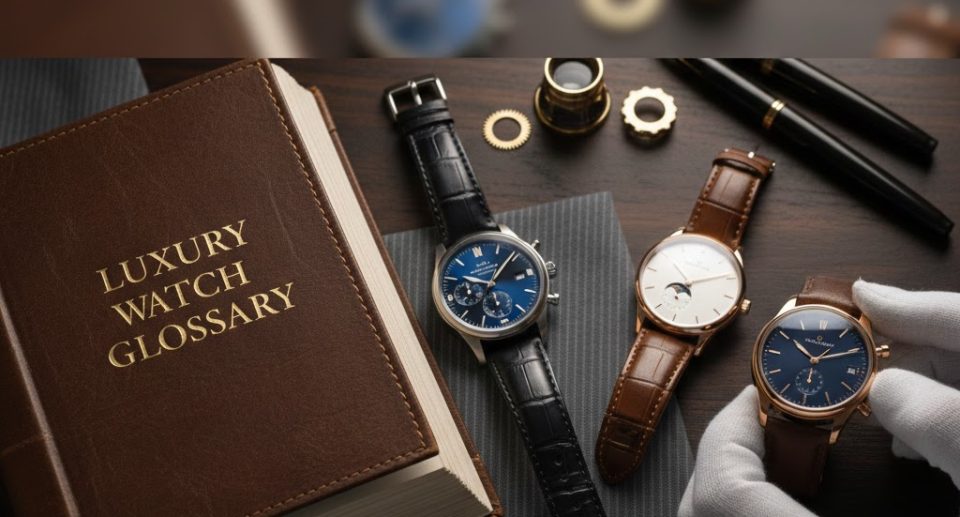

This is your definitive, in-depth luxury watch glossary—far more detailed, visually rich, and educational than standard lists. Updated for 2026 trends (including rising interest in hybrid movements, anti-magnetic tech, and sustainable materials), it covers everything from basic watches definition and watches anatomy to advanced complications, etymology, and collector insights.
Whether you’re decoding sub dials on a watch, understanding why it’s called a “watch” (from Old English “wæcce,” meaning to stay awake/guard, as early timepieces alerted night watchmen), or exploring haute horlogerie, this guide empowers you to appreciate, buy, and maintain luxury timepieces confidently.
Here are clear, detailed labeled diagrams of watch anatomy to help visualize the parts:

Types of Watch Movements
The movement (or calibre) is the “engine” powering your watch. Here’s a breakdown of the main types:
- Mechanical — Hand-Wound (Manual): Powered purely by winding the crown to tighten the mainspring. Offers a tactile ritual and pure tradition; requires daily/every-few-days winding.
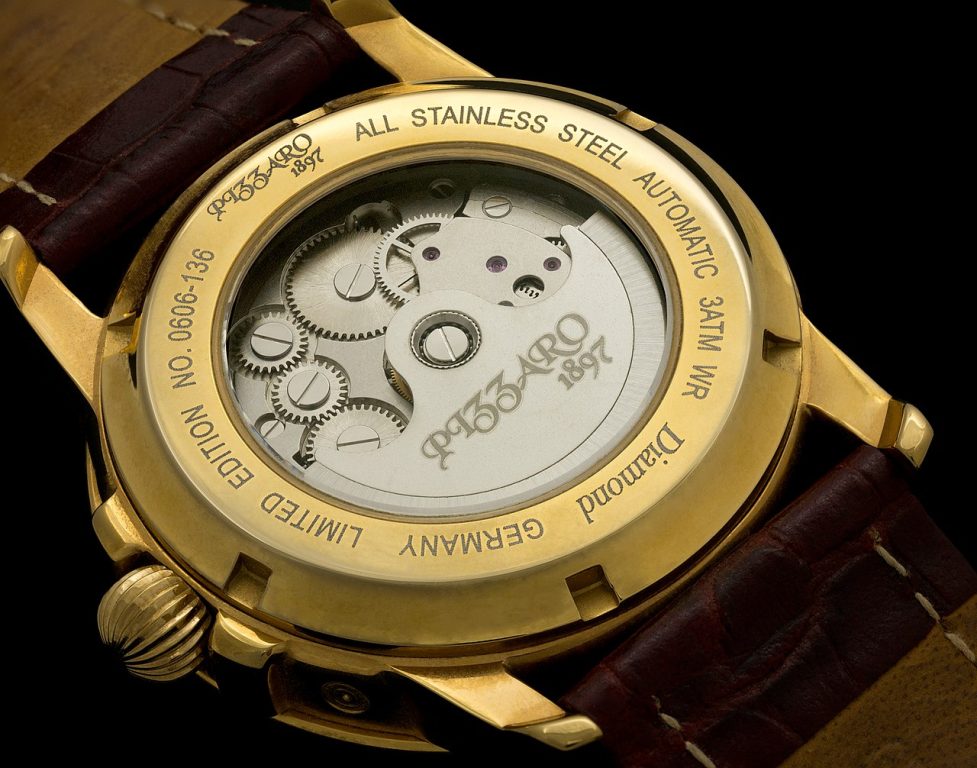
- Mechanical — Automatic (Self-Winding): Uses a rotor that spins with wrist motion to wind the mainspring. Can be manually wound for quick starts; ideal for daily wearers.
Here are stunning views of automatic movements with visible rotors:
- Quartz: Battery-powered with a quartz crystal oscillator for exceptional accuracy (±10 seconds/year); low maintenance but less “soul” for purists.
- Hybrid Innovations (2026 Highlights): Spring Drive (Grand Seiko) combines mechanical mainspring with quartz regulation for ultra-smooth seconds sweep. Micro-rotor designs keep profiles slim while maintaining automatic winding.
Core Watch Anatomy & Movement
Beyond the basics, these internal components make mechanical watches tick:
- Balance Wheel & Hairspring (Balance Spring): The oscillating heart; hairspring returns it to center. Variants like Breguet overcoil enhance precision.
- Escapement: Meters energy (e.g., Swiss lever or Omega Co-Axial for reduced friction).
- Power Reserve: Typical 40–80 hours; indicators show remaining energy.
- Jewels: Synthetic rubies as low-friction bearings (higher jewel count = more complications).
Key external anatomy includes case, dial, crystal (sapphire for scratch resistance), crown (for setting/winding), and lugs.
Timekeeping Complications & Functions
A complication is any function beyond basic time display. Here are the most coveted:
- Chronograph: Stopwatch with sub dials on watch (often three for elapsed minutes/hours/seconds).
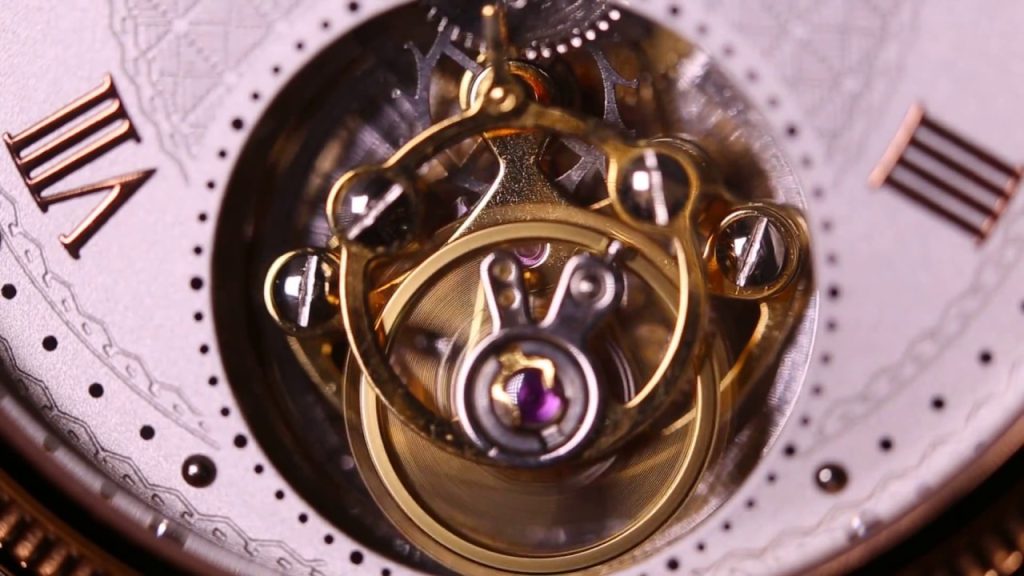
- Tourbillon: Rotating cage counters gravity’s effects on accuracy; a visual spectacle.
Intricate tourbillon movements up close:
- Moonphase: Artistic display of lunar cycle (29.5 days); beloved for poetic appeal.
- Perpetual Calendar: Auto-adjusts for month lengths and leap years (no correction until 2100+).
- Other notables: Minute repeater (chimes time on demand), GMT/dual time, power reserve indicator.
Case & Construction
The case protects everything—materials matter:
- Materials: Stainless steel (durable), titanium (lightweight), ceramic (scratch-resistant), gold/platinum (luxury).
- Water Resistance: Rated in meters/ATM; screw-down crowns and helium escape valves for deep diving.
- Caseback: Solid or exhibition (transparent sapphire) to admire the movement.
Display, Style & Dial Details
The dial is the face—art meets function:
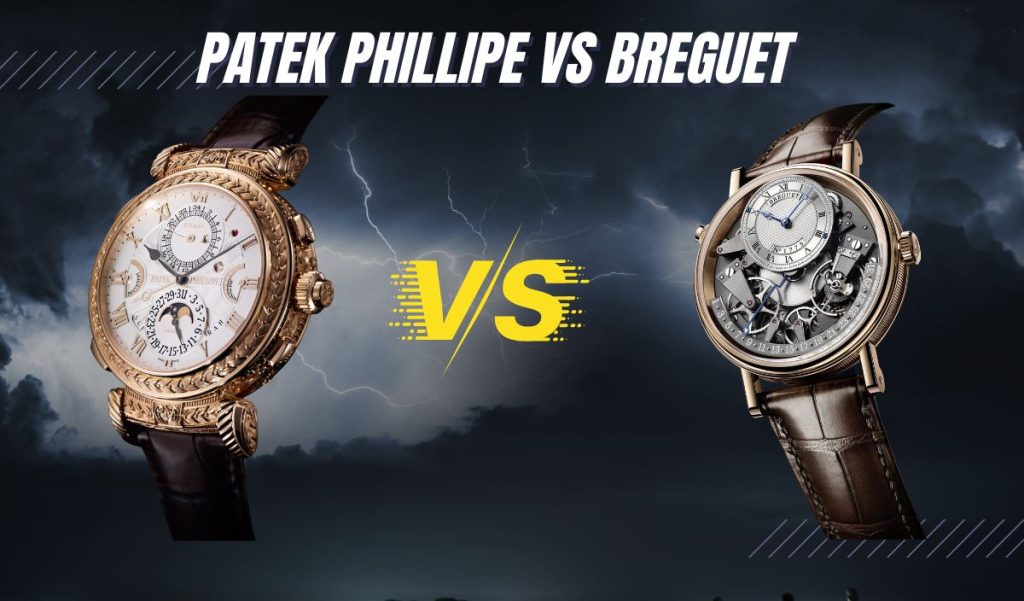
- Guilloché: Hand-engraved intricate patterns for depth and light play.
Exquisite guilloché dials from masters like Breguet and Patek Philippe:
- Lume (Super-LumiNova): Glows in the dark for readability.
- Finishes: Sunburst, fumé (gradient), sandwich dials.
External Components
- Bezel: Ring around crystal; rotating versions (uni-directional for divers) track elapsed time.
- Crown & Pushers: For adjustments; screw-down for sealing.
- Lugs & Bracelet: Affect fit; deployment clasps for security.
Scales, Tracks & Measuring
- Tachymeter: Measures speed (on chronographs).
- Pulsometer/Telemeter: Heart rate or distance calculations.
- Minute Track: Precise second markers.
Quality, Standards & Authentication
- Chronometer: COSC-certified accuracy.
- METAS: Stricter Swiss standard (anti-magnetic, power reserve tested).
- Swiss Made: Strict origin rules.
Measuring, Fit & Sizing
Measure wrist circumference; consider lug-to-lug for comfort (avoid overhang).
Care, Tools & Servicing
Service every 5–7 years for mechanicals; use demagnetizers, proper storage (watch boxes/winders).
Conclusion: Mastering the Language of Horology – Your Journey Continues
As we wrap up this ultimate luxury watch glossary (updated for 2026), you’ve now traversed the full spectrum of horological knowledge—from the rhythmic heartbeat of mechanical movements and the artistry of hand-guilloché dials to the precision engineering of complications and the timeless appeal of rotating bezels.
Understanding these terms isn’t just about vocabulary; it’s about unlocking a deeper connection to every timepiece you encounter. Whether you’re admiring the sweep of a second hand on a Grand Seiko Spring Drive, appreciating the craftsmanship behind a Patek Philippe perpetual calendar, or simply knowing why your Rolex Submariner’s unidirectional bezel is more than decoration, this knowledge transforms you from a casual observer into a true connoisseur.
Here are a few final, beautifully finished luxury movements that embody the pinnacle of what we’ve explored:
These intricate views showcase hand-finished bridges, Geneva stripes, perlage, and polished bevels—details that separate great watches from truly exceptional ones.
Horology is both an art and a science, a blend of tradition and innovation that continues to evolve. In 2026, we’re seeing exciting advancements in sustainable materials, greater anti-magnetic resistance, and even more accessible entry points into haute horlogerie—yet the core principles remain timeless.
Keep this glossary as your reference companion. Return to it when you’re researching your next purchase, debating movements with fellow enthusiasts, or simply enjoying the quiet satisfaction of knowing exactly what makes your watch tick.
The world of luxury watches is vast, rewarding, and deeply personal. Now armed with the language of horology, go forth—explore, collect, wear, and above all, savor every second.
Happy collecting, and may your timepieces always run true.