


Let’s clear something up right away: a women’s dress watch isn’t just a shrunken version of a men’s watch with diamonds glued on. That misconception has done real damage—pushing capable, design-forward t.mes pieces into the “jewelry accessory” category while ignoring the rich history of women who’ve shaped watchmaking itself. From Coco Chanel commissioning her first wristwatch in the 1930s to contemporary designers reimagining scale and proportion for feminine wrists, women’s dress watches have always carried their own distinct language. And in 2026, that language is finally being spoken with confidence—not as an afterthought, but as intentional design.
A true women’s dress watch understands something fundamental: elegance isn’t about size. It’s about harmony. It’s the watch that disappears into your cocktail dress sleeve until you glance down and catch its quiet gleam. The one that pairs equally well with a tailored blazer and silk trousers as it does with a slip dress and strappy heels. It doesn’t announce itself—it complements. And in a world still catching up to women’s nuanced relationship with t.mes pieces, that intentionality feels quietly revolutionary.
Beyond “Small and Sparkly”: What Actually Defines a Women’s Dress Watch
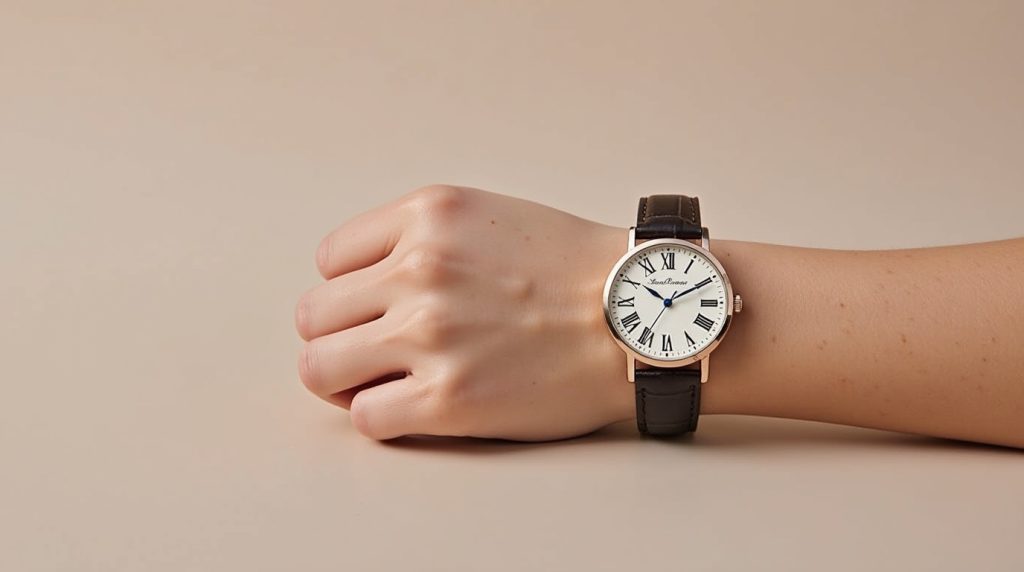
If you’ve ever felt alienated by watch marketing—the hyper-masculine dive watches, the aggressively sporty chronographs, or worse, the “for her” collects ions that feel like afterthoughts—you’re not alone. Women’s dress watches deserve better than condescension disguised as delicacy. Here’s what they actually value:
Proportion over arbitrary sizing.
Yes, many women’s dress watches run 26–34mm—but that’s not a rule. It’s a starting point. The real question: does the watch relate to your wrist? A 36mm Cartier Tank Française can feel perfectly elegant on a slender wrist if the lugs curve gently and the case wears thin. Conversely, a poorly proportioned 28mm watch with stubby lugs might look awkward. Try this: when the watch sits on your wrist, the case should feel like an extension of your arm—not a disc floating above it. Your eye should travel smoothly from hand to strap without interruption.
Dials that invite a second look.
This is where women’s dress watches often shine brightest. Mother-of-pearl isn’t just “girly”—it’s a material that shifts with light, revealing subtle rainbows no printed dial can replicate. Guilloché engine-turning catches candlelight at dinner in a way a flat dial never could. Even simple sunray brushing creates depth that feels alive. And gem-setting? When done thoughtfully—like Cartier’s subtle diamond markers rather than a fully iced-out bezel—it becomes texture, not bling. The goal isn’t to blind; it’s to intrigue.
Straps that feel like second skin.
Women’s wrists move differently. We gesture while talking, rest chins on hands, adjust hair—all while wearing watches. A stiff, thick strap that digs into the wrist bone after two hours isn’t elegant; it’s uncomfortable. Great women’s dress watches prioritize supple straps: thin alligator that molds to the wrist, soft calfskin with minimal lining, or even fabric straps woven with metallic threads for evening wear. And width matters—a 16mm strap on a 28mm case often wears more gracefully than forcing a 20mm strap onto a tiny lug.
Finishing that respects the wearer’s intelligence.
No one wants a watch that feels cheap the moment they put it on. Women’s dress watches at their best honor the wearer with details only she might notice: a caseback engraved with a meaningful date, a crown set with a single diamond that catches light when adjusting t.mes , or a movement visible through sapphire that’s finished with perlage and blued screws—not because it needs to be seen, but because craftsmanship matters even in hidden places.
A Brief History Worth Knowing (Because Context Changes Everything)
Here’s something watch bros rarely mention: women were wearing wristwatches before men. In the late 1800s, pocket watches were strictly masculine. So when Countess Koscowicz of Hungary received a wristwatch from Patek Philippe in 1868, it was considered a jewelry novelty—not serious t.mes keeping. For decades, wristwatches for women lived in this limbo: beautiful but not “real” watches.
That changed when women like Coco Chanel demanded functional elegance. Her 1930s Cartier commissions weren’t decorative—they were tools for a woman moving through the world on her own terms. Later, in the 1980s, Piaget’s ultra-thin Altiplano watches became favorites among women who appreciated mechanical sophistication without macho posturing.
Today’s renaissance builds on that legacy. Brands like Speake-Marin (founded by a woman, Maryann Grainger) and independent watchmakers like Fiona Krüger design explicitly for feminine wrists—not by shrinking men’s models, but by rethinking lug-to-lug distance, crown placement, and case curvature from the ground up. This isn’t niche marketing. It’s respect.
When to Wear a Women’s Dress Watch (And When to Skip It)
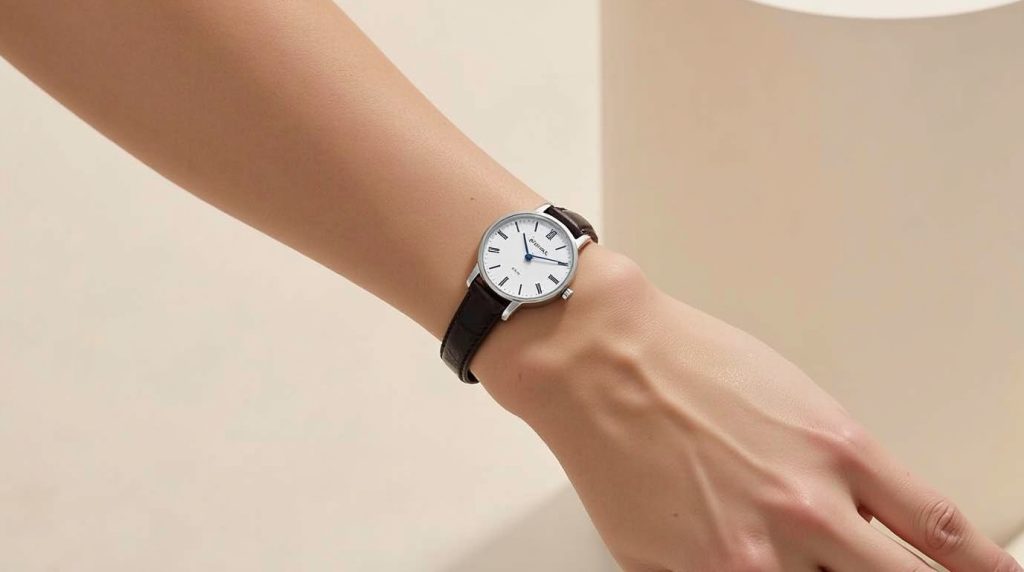
Let’s get practical. A dress watch isn’t your gym companion—and that’s perfectly okay. Its strength lies in specific moments where intentionality matters:
Cocktail events & black-tie affairs: This is the dress watch’s natural habitat. A slim 28–32mm piece with a black satin strap or fine mesh bracelet disappears under silk or chiffon sleeves until you raise a glass—and then it catches the light just so. Skip anything with a rotating bezel or prominent lume; save those for weekends.
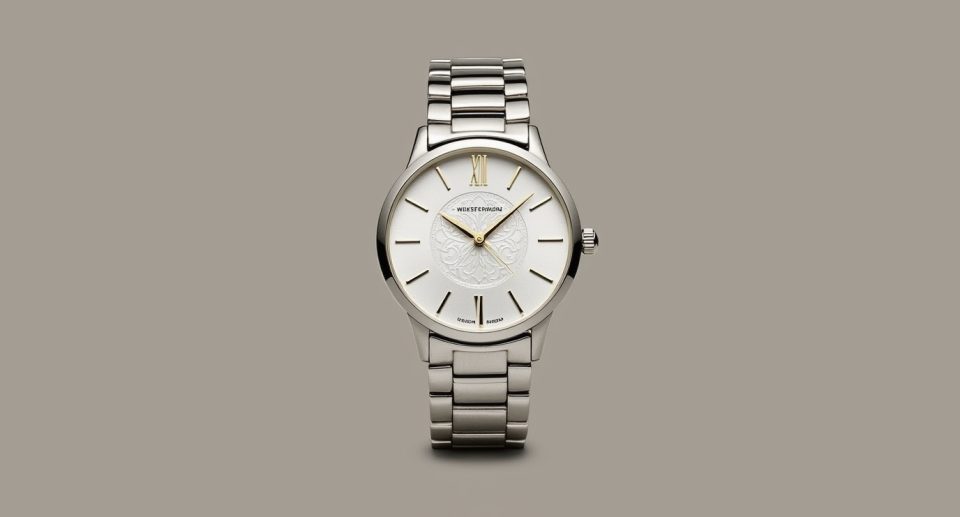
Boardroom power dressing: A minimalist round watch (think Jaeger-LeCoultre Rendez-Vous or Nomos Minimatik) with a white dial and slim steel bracelet says “I belong here” without shouting. It pairs beautifully with tailored suiting—especially when the bracelet echoes the cool tone of silver jewelry.
Date nights & dinners: This is where texture shines. A mother-of-pearl dial under candlelight, a rose gold case warming against your skin, a strap in burgundy or navy that coordinates with your dress without matching it exactly. The watch becomes part of the moment—not the focus of it.
Skip it when: You’re gardening, traveling with heavy bags, swimming, or doing anything involving repetitive wrist motion. Thin cases and delicate crystals aren’t built for impact. And that’s not fragility—it’s specialization. Would you wear satin heels to hike? Exactly.
Dress Watch vs. Everyday Watch: Understanding the Divide
Many women own one watch and try to make it do everything. There’s wisdom in versatility—but also freedom in having the right tool for the moment. Here’s how to tell the difference:
| Feature | Women’s Dress Watch | Everyday/Casual Watch |
| Case thickness | Under 8mm (slips under tight cuffs) | 9mm+ (more robust) |
| Water resistance | 30m (splash-proof only) | 50m+ (handwashing safe) |
| Dial texture | Mother-of-pearl, guilloché, subtle gem accents | Matte, sunray, minimal texture |
| Strap priority | Thin leather, satin, fine mesh | Rubber, fabric, thicker leather |
| Vibe | “I chose this for tonight” | “I grabbed this on my way out” |
The gray area? Watches like the Cartier Panthère or Piaget Limelight Gala bridge both worlds—dressy enough for evening but substantial enough for daily wear. They’re the equivalent of a great pair of loafers: polished but practical.
Styling Nuances Most Guides Miss (Because They’re Written by People Who Don’t Wear These Watches)
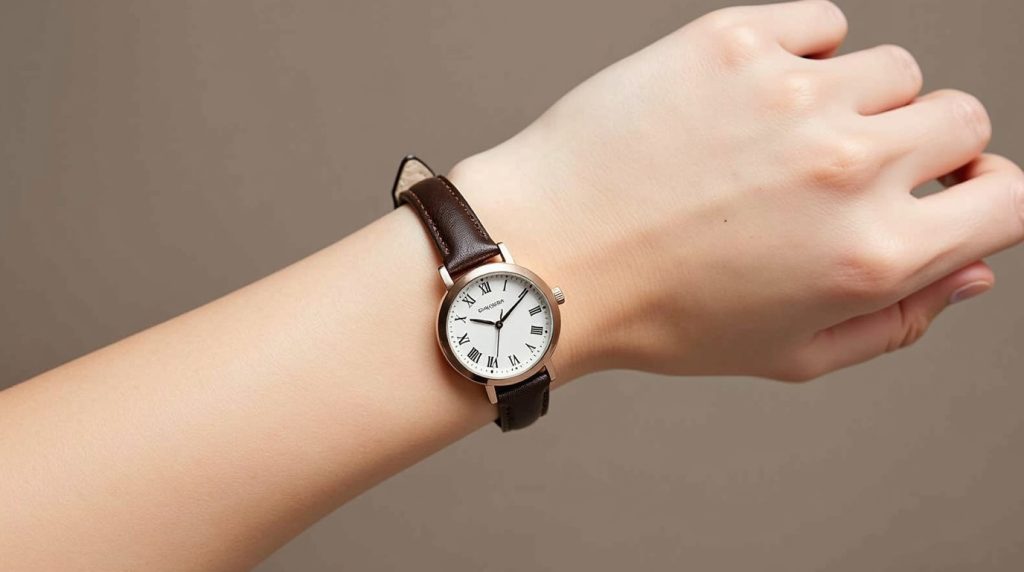
The bracelet layering question:
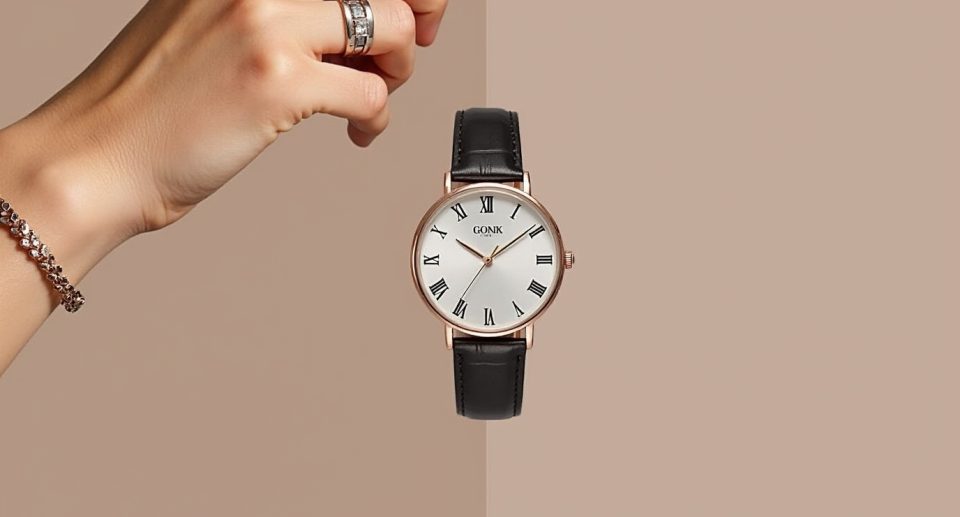
Yes, you can wear a delicate watch with bracelets—but thoughtfully. Stack thin bangles above the watch (toward your hand), not below it near the strap. Or wear a single substantial cuff below the watch (toward your elbow). Never sandwich the watch between bracelets—that creates bulk and risks scratching the case. And skip noisy metal-on-metal clatter; if your bracelets jingle when you move, the watch gets lost in the noise.
Sleeve length matters more than you think:
That beautiful watch vanishes under a blazer sleeve that’s too long. Ideal proportions: jacket sleeve ends at the wrist bone, shirt or dress sleeve extends ¼ inch beyond it, watch sits just beneath that exposed cuff. When you gesture, the watch reveals itself naturally—no awkward sleeve-pushing required.
Metal matching isn’t about perfection:
Your rose gold watch doesn’t need to exactly match your rose gold earrings. What matters is temperature harmony: warm metals (rose gold, yellow gold) with warm jewelry; cool metals (white gold, platinum) with silver or platinum pieces. And a little contrast can be intentional—a steel watch with gold jewelry says “I understand metals” rather than “I matched everything.”
The “no watch” moment is valid:
Somet.mes s the most elegant choice is no watch at all. Heavy beading on a gown sleeve? Skip the watch. Delicate lace that might catch on a crown? Skip it. Your wrist isn’t incomplete without a t.mes piece—it’s an opportunity for a beautiful cuff or bare elegance. Watches should serve the moment, not dominate it.
Icons Worth Knowing (Across Every Budget)
You don’t need a trust fund to own a meaningful dress watch. Here are pieces that understand women’s wrists—without talking down to them:
Under $1,000
- Seiko Presage Cocktail t.mes (~$400): That signature textured dial inspired by Japanese cocktails—available in 28.5mm with mother-of-pearl variants. Feels luxurious without the markup.
- Olivia Burton (~$100–$150): Don’t roll your eyes. Their slim 28mm cases with marble or mother-of-pearl dials are surprisingly well-finished for the price. Perfect “first real watch” energy.
- Bulova Classic (~$300): Ultra-thin (6mm!), minimalist dials, and that satisfying Swiss-adjacent reliability. The unsung hero of affordable dress watches.
$1,000–$5,000
- Cartier Tank Solo (~$2,800): The original rectangular icon. 24.4mm × 31.2mm wears larger than specs suggest thanks to its elongated shape. t.mes less without trying.
- Nomos Minimatik (~$2,700): Bauhaus purity in 33mm. Hand-finished German movement, razor-thin typography, and that addictive “less is more” confidence.
- Longines DolceVita (~$1,800): Rectangular elegance with a whisper-thin profile. Often overlooked—but quietly perfect.
The Icons ($5,000+)
- Cartier Panthère (~$6,000+): The integrated bracelet legend. Curved case that hugs the wrist, available in sizes from petite to substantial. Still unmatched after 40 years.
- Piaget Altiplano (~$15,000+): When thinness becomes an art form. 6.3mm total thickness in 26mm or 34mm—worn by women who appreciate engineering as poetry.
- Jaeger-LeCoultre Rendez-Vous (~$18,000+): That signature star aperture at 6 o’clock. Feminine without frills—mechanically complex but visually serene.
One Watch or Two? Building a Thoughtful collects ion
If you’re starting out, one versatile piece covers most bases:
→ 28–32mm case, under 8mm thick, white or champagne dial, interchangeable straps (black satin for evening, brown leather for day).
A Cartier Tank Louis Cartier or Nomos Minimatik fits this beautifully.
If you’re curating intentionally:
- The evening specialist: Ultra-thin (under 7mm), precious metal, textured dial—reserved for moments when every detail matters.
- The daily companion: Slightly larger (32–34mm), 50m water resistance, steel bracelet—your go-to for office-to-dinner transitions.
Why This All Still Matters
Choosing a dress watch as a woman in 2026 isn’t about conforming to outdated expectations. It’s about claiming space in a world that’s only recently started designing for us rather than at us. It’s understanding that elegance isn’t passive—it’s an active choice to move through the world with grace and intention.
The best women’s dress watches don’t whisper “I’m delicate.” They say: I understand proportion. I value craftsmanship. I move through formal spaces with quiet confidence. They’re not accessories to an outfit—they’re part of how you carry yourself.
And here’s the secret no one tells you: the most elegant watch on a woman’s wrist isn’t the most expensive one. It’s the one she forgets she’s wearing—until she glances down, catches its light, and remembers why she chose it in the first place. Not to be seen. But to feel, for a moment, perfectly put together in a world that rarely makes that easy.
That’s not just horology. It’s humanity. And honestly? That’s the kind of luxury worth wearing.