
Understanding the Tourbillon Movement for Beginners

TrueFacet
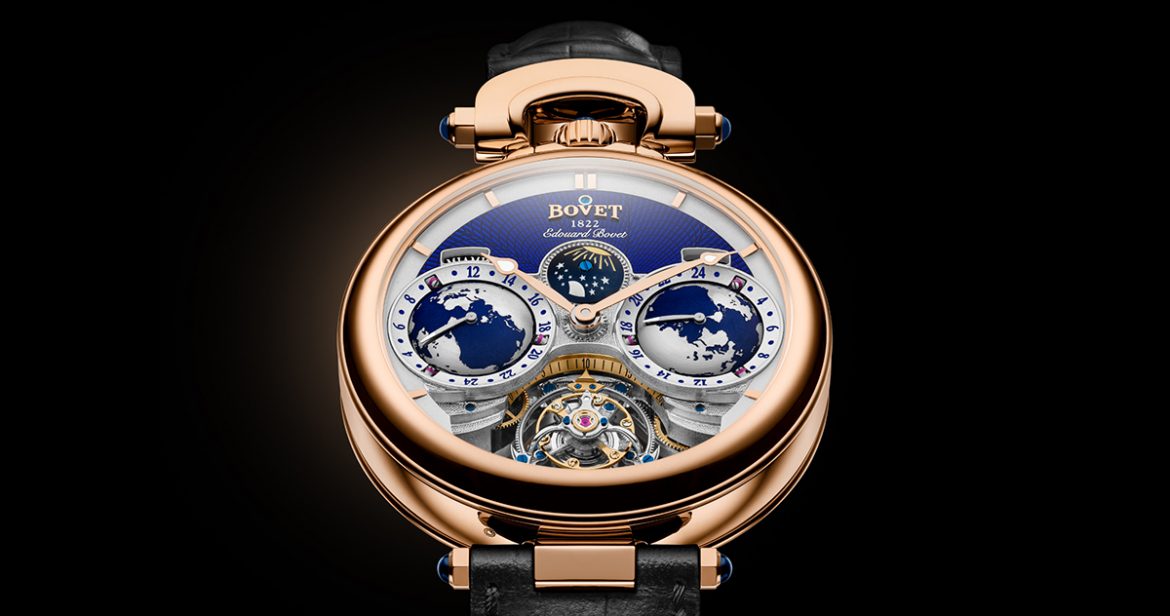

The tourbillon movement was developed and patented by Abraham-Louis Breguet in 1795. Today, the tourbillon is still regarded as one of the most complicated—and therefore most expensive—movements. We take a beginner’s look at how a tourbillon movement works and the updated flying tourbillon.
How to Pronounce Tourbillon
Tourbillon is the French word for whirlwind so, given its origins, it’s pronounced “tour-be-on”—slightly different than the Americanized, “tour-billion”.
Just the Basics: An Overview of the Tourbillon
The tourbillon is a mind-bendingly complicated movement but here is a simplified look at its marvelous complexity.
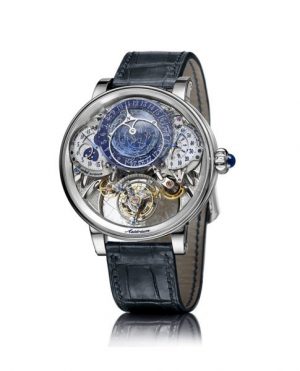
Before the tourbillon, the t.mes -keeping accuracy of pocket watches was heavily affected by gravity. Gravity would “pull” on the pocket watch’s delicate balance spring. The balance spring acts like a pendulum of sorts and controls the speed at which the balance wheel oscillates. This, in turn, maintains the rate of the movement of the hands. So, when gravity “pulls” on the sensitive balance spring, it throws off the timing regulator and the watch is less accurate.
The tourbillon movement was designed to offset gravity’s effect on a watch’s accuracy by rotating all of the t.mes -keeping components a full 360 degrees over a set period of t.mes . Unlike a traditional balance spring that only moves in a back-and-forth motion, the full range of the tourbillon theoretically means a watch will pass through both the slow and fast positions (or the positions when gravity will slow down or speed up t.mes ) so the t.mes -bending positions will effectively cancel each other out.
A Quick Look at the Flying Tourbillon
Breguet’s original tourbillon was so complicated that only the most elite watchmakers at the t.mes
could build even a tourbillon, let alone improve upon it. So, when Alfred Helwig, an instructor at the German School of Watchmaking, introduced the flying tourbillon in 1920 (nearly 100 years after Breguet’s death), it was a brilliant breakthrough in haute horology design and technology.
To understand a flying tourbillon, think of a gyroscope and imagine the tourbillon inside a cage at the center of the gyroscope. In this setting, the flying tourbillon is cantilevered and supported on only one side, instead of being held in place by a bridge at the top and bottom. This allows for the flying tourbillon’s balance wheel to move in three dimensions, unlike the traditional tourbillon that only moves in two dimensions.
If you’re eager to learn more about watch movements and complications, read our post “Understanding the Tachymeter Bezel” here.
[lfp_panel global_name=”true” link=”https://buyluxury.com.cn/manufacture-royale-1770-micromegas-revolution-1770mr45-08-b.html” image=”https://buyluxury.com.cn/guide/wp-content/uploads/2018/04/micromegasrevolution_product_image_001.jpg” title=”Manufacture Royale” status=”none” price=”$172,200″]Manufacture Royale 1770 Micromegas Revolution 1770MR45.08.B[/lfp_panel][lfp_panel link=”https://buyluxury.com.cn/1770-177043-01p-br-watch.html” image=”https://buyluxury.com.cn/guide/wp-content/uploads/2018/04/17704301PBR.jpg” title=”Manufacture Royale” status=”none” price=”$55,700″]Manufacture Royale 1770 Flying Tourbillon Skeleton Chocolate 177043.01P.BR[/lfp_panel][lfp_panel global_name=”true” link=”https://buyluxury.com.cn/instrument-1utag-l01a-watch.html” image=”https://buyluxury.com.cn/guide/wp-content/uploads/2018/04/1UTAG.L01A_1.jpg” title=”Arnold & Son” status=”none” price=”$64,200″]Arnold & Son Utte Palladium 1UTAG.L01A Watch[/lfp_panel]




1 Comment
[…] their repeaters with other key watch complications, including automatons, perpetual calendars and tourbillon to create Grand […]