


Let’s talk about something we rarely admit out loud: buying luxury jewelry can feel equal parts thrilling and terrifying. You’re handed a velvet box containing a piece that might cost more than your rent—and you’re expected to feel grateful. Meanwhile, a voice in your head whispers: Is this actually worth it? Or am I just paying for a name?
I’ve sat across from clients who bought Cartier Love bracelets as engagement alternatives, inherited Tiffany solitaires they didn’t love but felt obligated to wear, and saved for years for a Van Cleef & Arpels piece they’d admired since college. What I’ve learned isn’t in any marketing brochure: luxury jewelry’s value isn’t fixed. It shifts depending on why you’re buying, how you’ll wear it, and whether the brand’s philosophy aligns with yours. Somet.mes s that $8,000 necklace is worth every penny. Somet.mes s a $400 piece from an independent designer brings more joy.
This isn’t about shaming brand loyalty or pretending money doesn’t matter. It’s about cutting through the mystique so you can spend confidently—whether that’s $500 or $50,000. Let’s start with the names you keep hearing, then dig into what you’re actually paying for.
Luxury Jewelry Brands Worth Knowing (Organized by Vibe, Not Just Price)
Forget alphabetical lists that dump 50 names with zero context. What matters is which brands resonate with your style—not which carry the heaviest markup. Here’s how the landscape actually breaks down:
The Heritage Houses: When History Is Part of the Design
These brands built empires on generational craftsmanship. You’re not just buying gold and gems—you’re buying a slice of history.
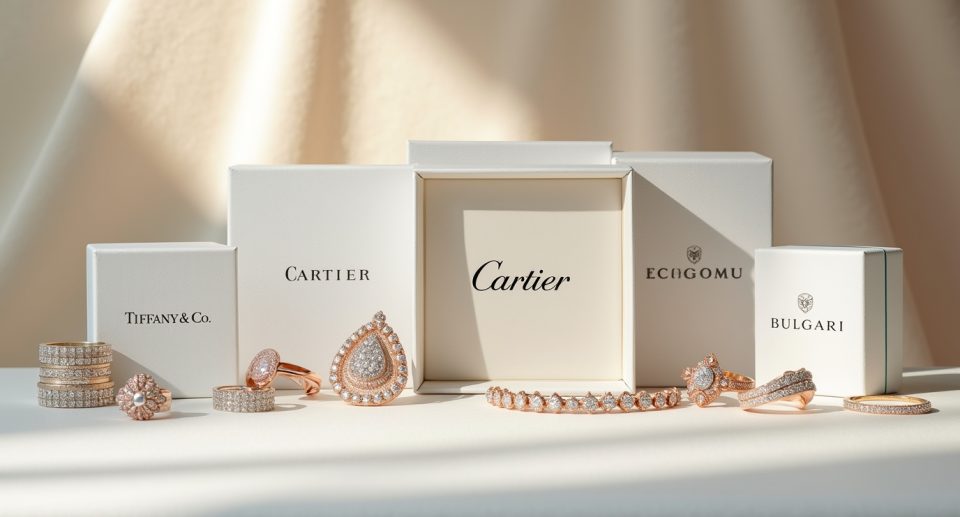
- Cartier (France, 1847): The original “jeweler to kings.” Famous for the Love bracelet (that screwdriver ritual isn’t gimmicky—it’s intentional symbolism), Tank watch, and panther motifs. Their strength? t.mes less pieces that rarely look dated. Weakness? Some iconic designs have become so ubiquitous they’ve lost exclusivity.
- Tiffany & Co. (USA, 1837): That robin’s egg blue box carries emotional weight for generations of Americans. Their six-prong solitaire setting literally changed engagement ring history. Modern strength: accessible entry points ($250 Return to Tiffany necklaces) that feel special without breaking the bank. Caveat: Their high jewelry commands premium pricing that somet.mes s outpaces gem quality.
- Van Cleef & Arpels (France, 1906): Poetic craftsmanship. The Alhambra four-leaf clover motif isn’t just pretty—it’s engineered with mystery settings where gems appear to float without visible prongs. Their high jewelry pieces often tell stories (ballets, constellations). Worth noting: Their craftsmanship justifies premium pricing more consistently than many peers.
- Boucheron (France, 1858): The architect’s jeweler. Known for bold geometry (think: Quatre ring’s four distinct gold bands) and pioneering use of rock crystal. Less mainstream than Cartier—but beloved by those who appreciate architectural precision.
- Bulgari (Italy, 1884): Roman boldness. Serpenti coils, high-contrast color combos (emeralds against onyx), and that signature tubogas mesh technique. If you want jewelry that makes an entrance, Bulgari delivers. Their strength? Unapologetic Italian glamour that photographs beautifully.
The Quiet Luxury Players: For When You Prefer Whispers Over Shouts
These brands attract collects ors who recognize quality without logos s.
- David Webb (USA, 1948): The American answer to European houses. Famous for animal motifs (especially zebra and leopard) rendered in bold gold with enamel. Worn by Jackie Kennedy and modern style icons like Gwyneth Paltrow. Their pieces hold value remarkably well on the secondary market.
- JAR (Joel Arthur Rosenthal) (France, 1978): The holy grail. Rosenthal makes maybe 50 pieces a year—by invitation only. No storefront, no website, no advertising. His gem-setting is so precise stones seem to glow from within. You’ll never own JAR unless you’re already a serious collects or—but knowing it exists resets your understanding of what’s possible.
- Graff (UK, 1960): Diamond specialists. They source, cut, and set some of the world’s rarest stones (including the 303-carat “Graff Lesedi La Rona”). If diamond quality is your priority over design flair, Graff delivers uncompromising stone selection.
Contemporary Voices: Fresh Perspectives on Luxury
These designers blend heritage techniques with modern sensibilities.
- Pomellato (Italy, 1967): Milanese ease. Their Nudo rings—colored gemstones set in smooth gold domes—feel effortlessly wearable. They champion prêt-à-porter jewelry: pieces meant for daily life, not just special occasions.
- Messika (France, 2005): Diamond innovation. Founder Valérie Messika (daughter of a diamond dealer) reimagined how diamonds move on the body—like the Skinny cuff that wraps the wrist with fluid diamond lines. Strong appeal for younger buyers wanting diamonds without traditional settings.
- Spinelli Kilcollin (USA, 2010): Los Angeles cool. Their signature linked rings (wear one, two, or three bands together) captured minimalist luxury before it was mainstream. Favored by celebrities who want understated pieces that photograph well.
- Monique Péan (USA, 2006): Ethical storytelling. Uses fossilized mammoth ivory, meteorite, and sustainably sourced gems. Each piece connects to indigenous craftsmanship traditions. For when provenance matters as much as beauty.
The Accessible Luxury Tier: Realistic Entry Points
You don’t need $5,000 to own something beautiful with integrity.
- Mejuri (Canada, 2015): Direct-to-consumer model cuts retail markups. Their 14k gold essentials ($100–$300) offer everyday luxury without the heritage markup. Quality is solid for the price—but don’t expect hand-engraving or rare gems.
- Catbird (USA, 2004): Brooklyn’s answer to fine jewelry. Delicate 14k gold pieces with subtle diamond accents ($200–$800). Famous for “something blue” sapphire engagement rings and stackable everyday rings. Strong ethical sourcing commitments.
- WWAKE (USA, 2012): Art-school jewelry. Pearls set unconventionally (floating on thin gold chains), mismatched gem pairings. For those who see jewelry as personal expression rather than status.
Why Luxury Jewelry Costs What It Costs (Beyond “Because Rich People Buy It”)
Let’s demystify the price tag. That $15,000 Cartier bracelet isn’t priced at 10x production cost because they’re greedy (though retail markups are real). Multiple factors layer together:
1. Materials matter—but not how you think
Yes, 18k gold costs more than 14k. Yes, D-color flawless diamonds command premiums. But here’s what brands won’t advertise: two pieces with identical gem specs can vary wildly in price based on cut precision. A poorly cut “G VS1” diamond looks dull next to an expertly cut one—even with identical certificates. Luxury houses invest in master cutters who maximize light performance. That skill adds real value.
2. Craftsmanship has a heartbeat
At Van Cleef’s Paris workshop, a single Alhambra motif might pass through seven artisans’ hands: the goldsmith who shapes the clover, the polisher who creates mirror finishes, the setter who secures each malachite slice without visible glue. This isn’t assembly-line work—it’s slow, human-scale creation. When you pay $6,000 for an Alhambra, roughly 40% covers materials, 35% covers this labor, and 25% covers brand/marketing. That labor percentage? It’s why these pieces often outlast their owners.
3. Heritage isn’t free
Cartier maintains archives dating to 1847. Tiffany’s workshop still uses some tools from the 1920s. This historical continuity requires real investment—curators, conservators, master artisans training apprentices for a decade before they touch client pieces. You’re subsidizing cultural preservation whether you realize it or not.
4. The “halo effect” markup
Here’s the uncomfortable truth: brands price iconic pieces (Love bracelet, Tiffany solitaire) at accessible-but-aspirational points to get you in the door. Then they make real margins on high jewelry ($100K+) and fragrances/accessories. Your $800 bracelet helps fund the $2 million necklace no one will buy—but that necklace maintains the brand’s aura of unattainable luxury that makes your bracelet feel special. It’s a ecosystem—and you’re part of it.
5. Retail experience as product
That hushed salon, the white gloves, the complimentary champagne—it’s not just theater. Luxury jewelry requires intimate consultation (finger sizing, metal allergies, lifestyle considerations). These boutiques employ highly trained specialists (not commission-driven salespeople). That experience costs money—and gets baked into pricing.
Are Luxury Brands Worth It? An Honest Breakdown
The real answer: It depends entirely on your why. Let’s get specific.
✅ Worth the splurge when:
- You’ll wear it daily for years. A $5,000 Cartier Love bracelet worn 300 days a year for a decade costs ~$4.50/day. A $500 fast-fashion piece that tarnishes in 6 months costs $2.75/day—but you stop wearing it. Longevity changes the math.
- The design has personal meaning. That Tiffany solitaire might be “basic”—but if it connects to your grandmother’s ring or represents a milestone, its emotional ROI outweighs objective value. Jewelry isn’t always rational—and that’s okay.
- You value repairability. Luxury houses will resize, re-tip prongs, or restring pearls decades later—often for free if you’re a client. Fast-fashion jewelry becomes disposable the moment a clasp breaks.
- You plan to pass it down. Well-made pieces in classic designs transcend trends. That 1980s Cartier Tank watch still looks current; that 2015 stat.mes nt necklace probably doesn’t.
❌ Skip the markup when:
- You’re chasing trends. That chunky chain necklace might feel essential now—but will you wear it in 2028? Save trend pieces for accessible brands where loss hurts less.
- You need “cost.mes jewelry energy” with fine materials. Want something bold for a wedding but won’t wear again? Consider renting from sites like Rent the Runway or buying pre-owned. No shame in strategic spending.
- The brand’s values clash with yours. Some houses have problematic sourcing histories or resist transparency. If ethics matter to you, that $10,000 savings might be better spent with an ethical independent designer whose values align with yours.
- You’re buying for instagrams . If the primary joy comes from posting it—not wearing it—you’re paying for content creation, not jewelry. Be honest with yourself.
The Paris Pricing Myth: Are Luxury Brands Actually Cheaper Overseas?
Short answer: Somet.mes s—but not enough to justify a shopping trip solely for savings.
Here’s the reality: EU VAT refunds (typically 12–15% for non-EU residents) can make purchases cheaper in Paris/Milan—but only if:
- You spend enough to offset travel costs (usually $2,000+ after refund)
- You remember to get the tax-free form stamped at customs before checking bags
- The brand participates in VAT refunds (most do, but not all)
More importantly: pricing has globalized. Cartier’s Love bracelet costs roughly the same in NYC, Paris, and Tokyo after currency conversion and VAT adjustments. The real advantage of buying abroad? Access to region-exclusive pieces (like Cartier’s Paris boutique-only high jewelry) or better availability of discontinued items. Not.mes aningful savings.
Where you can save: pre-owned markets. A gently worn Cartier Love bracelet might cost 30–40% less on sites like The RealReal or Vestiaire collects ive—with identical quality and full authenticity. For iconic designs that don’t tarnish or wear out, pre-owned is often the smartest luxury play.
The Uncomfortable Truth No One Admits
Luxury jewelry’s greatest value often isn’t in the object itself—it’s in the permission it gives you to prioritize yourself.
I’ve watched clients hesitate over $1,200 earrings for months—then buy them after a promotion, a divorce, or surviving illness. The earrings weren’t the point. The act of choosing something beautiful for themselves, without justification, was. In a world that constantly demands women minimize their desires (“Is it practical? Will I wear it enough?”), luxury jewelry can become a quiet rebellion: I am allowed to want beautiful things simply because they bring me joy.
That emotional utility is real. But it only works when you define the value—not the brand’s marketing team.
So… Should You Buy That Piece?
Ask yourself three questions before swiping your card:
- “Will I still love this in five years?” Not “Will it be trendy?” but “Does this design resonate with my aesthetic—not instagrams ’s?” Classic pieces win here.
- “What happens when it needs repair?” Google “[brand] repair policy.” If they’ll service it decades later (Cartier, Tiffany, Van Cleef all will), that longevity justifies premium pricing. If not, reconsider.
- “Am I buying the piece—or the box?” Be ruthlessly honest. If removing the logos would make you love it less, you’re paying for status. Nothing wrong with that—if you acknowledge it. But don’t pretend it’s about “craftsmanship” when it’s really about signaling.
Final Thought: Luxury Is a Tool, Not a Trophy
The most elegant jewelry collects ions I’ve seen aren’t filled with logos -heavy pieces. They’re thoughtful mixes: a vintage Cartier brooch worn with a cashmere sweater, a $200 Catbird ring stacked with a family heirloom, a bold Pomellato cuff paired with jeans. These women understand something crucial: luxury jewelry’s highest purpose isn’t to announce your net worth. It’s to enhance moments—a hand resting on a table during an important conversation, light catching a pendant as you laugh with friends, the quiet confidence of wearing something beautiful simply because you chose it.
That feeling isn’t exclusive to $20,000 necklaces. I’ve seen women light up wearing $150 WWAKE pearl earrings they saved for months to buy. The joy wasn’t in the price tag—it was in the intentionality.
So yes—luxury brands can be worth it. But not because they’re expensive. Because when their craftsmanship, design philosophy, and your personal values align? They become more than jewelry. They become quiet companions to your life’s meaningful moments.
And that’s a value no price tag can fully capture.