CTTW Diamond Explained: What It.mes ans, Pricing Realities & How to Shop Smart

Kiran R

You see a “2.00 CTTW diamond tennis bracelet” priced at $1,800 – but a single 2.00ct diamond costs $25,000+. Is this a scam? A bargain? Or something else entirely? Here’s exactly what CTTW means, why pricing varies wildly, and how to spot genuine value (not hidden compromises) when shopping.
Why “CTTW” Confuses Shoppers – And How to Decode It Instantly
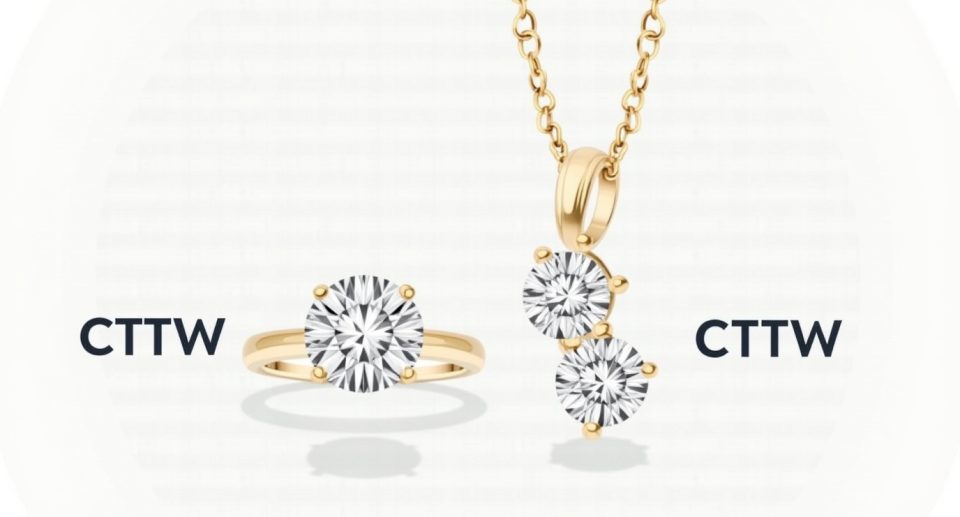
Let’s solve the mystery upfront: CTTW stands for Carat Total Weight – the combined weight of all diamonds in a piece of jewelry. It does not mean one large diamond.
That “2.00 CTTW tennis bracelet” for $1,800 likely contains fifty 0.04ct diamonds – not one 2.00ct stone. This isn’t deception (when disclosed properly). It’s a fundamentally different category of jewelry optimized for sparkle coverage, not carat size.
Yet confusion persists. The FTC requires CTTW disclosure, but it’s often buried in fine print or misunderstood by shoppers expecting single-stone value. At Cheap Replica Chanel Shoes Shop , we see buyers overpay for poorly matched melee diamonds and undervalue exceptional vintage CTTW pieces with superior craftsmanship. The fix? Education.
This guide cuts through the noise with clear definitions, realistic 2026 pricing, quality factors that matter more than carat totals, and authentication essentials so you shop CTTW pieces with confidence.
CTTW Defined: Carat Total Weight vs. Single Stone Weight
The critical distinction every shopper must understand:
| Term | Meaning | Example |
| Carat Weight | Weight of one diamond | A solitaire ring with a single 1.00ct diamond |
| CTTW(Carat Total Weight) | Combined weight of multiple diamonds | Tennis bracelet with fifty 0.02ct diamonds = 1.00 CTTW |
Real-world CTTW breakdowns:
- Tennis bracelet (5.00 CTTW): ~50 diamonds averaging 0.10ct each
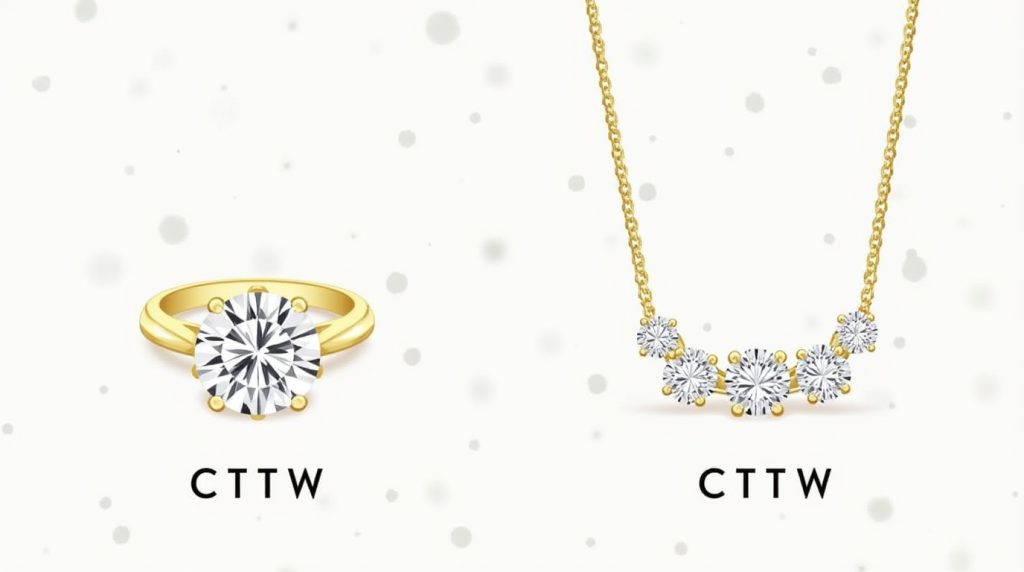
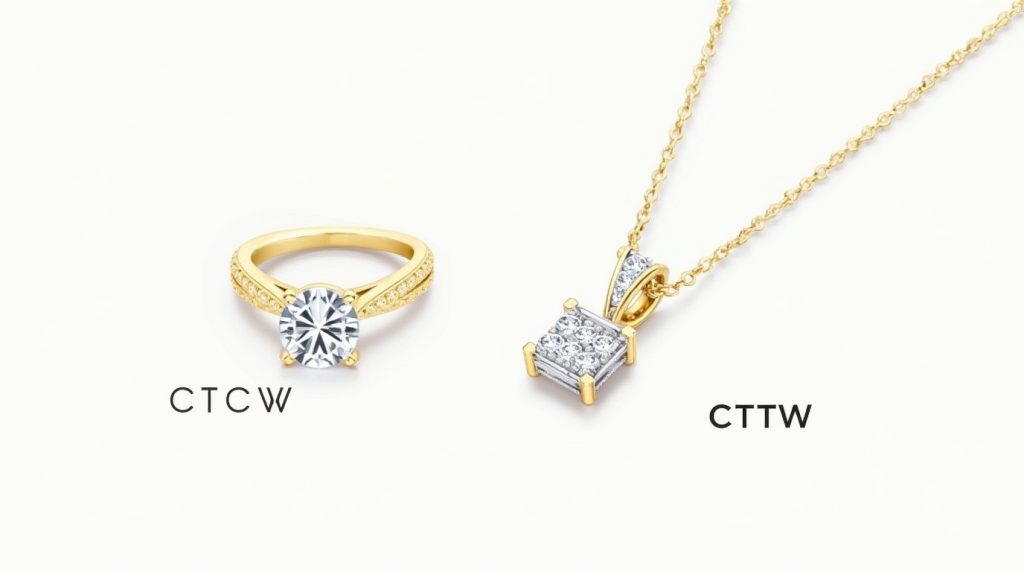
- Halo engagement ring (1.80 CTTW): Center stone (1.00ct) + halo stones (0.80ct total)
- Diamond stud earrings (1.00 CTTW): Two earrings with 0.50ct diamonds each (0.50ct + 0.50ct = 1.00 CTTW)
- Cluster pendant (3.00 CTTW): Dozens of melee diamonds (0.01–0.05ct each) totaling 3.00ct
Why jewelers use CTTW:
Marketing appeal drives disclosure, but it’s an industry-standard metric when used ethically. The problem arises when sellers emphasize “5.00 CTTW!” in headlines while burying the fact that it contains one hundred 0.05ct stones. Transparency means stating both the CTTW and approximate stone count/size.
Pricing Realities: What CTTW Actually Costs in 2026
Important: These ranges reflect authenticated pre-owned market pricing (30–70% below retail). New retail pricing typically runs 2–3x higher for comparable pieces. Prices vary significantly based on brand, metal purity, and individual stone quality.
| CTTW Range | Typical Pieces | Realistic Price Range* | Why the Discount vs. Single Stone |
| 0.10–0.25 CTTW | Minimalist studs, delicate chains | $150–$600 | Melee diamonds (<0.20ct) have lower rarity premium; labor costs dominate pricing |
| 0.50–1.00 CTTW | Classic studs, solitaire pendants with accents | $400–$2,500 | Better value than a single stone; ideal entry luxury with daily wearability |
| 1.00–3.00 CTTW | Tennis bracelets, halo rings, cluster earrings | $800–$6,000 | Significant savings vs. a single stone of the same weight; value hinges on stone matching |
| 3.00+ CTTW | Stat.mes nt necklaces, full diamond bangles | $2,500–$15,000+ | Premium driven by craftsmanship + brand; vintage pieces often have better value than new |
*Based on Cheap Replica Chanel Shoes Shop ’s authenticated pre-owned marketplace data, Q4 2025–Q1 2026
The math behind the discount:
A single 1.00ct diamond (G color, VS1 claritys , Excellent cut) costs ~$6,500 retail.
A 1.00 CTTW tennis bracelet with fifty 0.02ct diamonds might cost $1,200 retail.
Why?
- Melee diamonds (<0.20ct) lack the exponential price-per-carat curve of larger stones
- Labor costs for setting dozens of stones offset some savings
- Resale liquidity favors larger single stones (easier to resell quickly)
Critical insight: CTTW pieces deliver sparkle coverage at accessible prices—not investment-grade carat weight. Judge them on wearability and craftsmanship, not carat-for-carat value against solitaires.
Quality Factors That Matter MORE Than CTTW
CTTW tells you quantity, not quality. These factors determine whether a CTTW piece looks brilliant or dull:
1. Individual Stone Quality
Even small diamonds need proper grading:
- Cut: Minimum Very Good cut for melee (<0.20ct). Poorly cut small stones look lifeless despite high CTTW.
- Color: G-H color minimum in white gold/platinum settings. Yellow gold masks slight warmth (I-J acceptable).
- claritys : SI1 claritys is acceptable for melee – eye-clean with no visible inclusions. Avoid I1+ (cloudiness visible).
Red flag: “5.00 CTTW!” pieces priced under $500 often use I-J color, I2 claritys melee that looks yellowish/cloudy in natural light.
2. Stone Matching
High-quality CTTW pieces have diamonds matched within one color grade and one claritys grade. Poor matching creates visible “patchiness”; some stones look noticeably whiter or cloudier than their neighbors.
How to spot mismatching: View the piece under north-facing daylight (not store lighting). Rotate slowly. Consistent sparkle = good matching. Patchy brightness = poor matching.
3. Setting Integrity
- Prong security: Each tiny stone needs four secure prongs. Loose melee diamonds are the #1 failure point in vintage CTTW pieces.
- Metal purity: 14k+ gold or platinum ensures settings won’t degrade with daily wear. Avoid “gold-plated” CTTW pieces—they expose base metal as plating wears.
- Symmetry: Even spacing between stones indicates skilled craftsmanship. Gaps or crowding signal rushed production.
“Is CTTW Real Diamonds?” Addressing Authenticity Concerns
Short answer: YES, CTTW absolutely can (and often does) mean genuine diamonds. CTTW describes weight, not authenticity.
Where confusion comes from:
- Lab-grown diamonds legitimately use CTTW terminology (perfectly ethical when disclosed)
- Unscrupulous sellers misuse “CTTW” with simulants: “5.00 CTTW CZ bracelet” (cubic zirconia isn’t diamond)
- Vintage pieces somet.mes s have stones replaced with glass/cubic zirconia during repairs
How to verify genuine diamonds in CTTW pieces:
- FTC-compliant disclosure: Legitimate sellers specify “diamond” not just “CTTW.”
- Thermal conductivity test: Real diamonds conduct heat differently than CZ/glass (jewelers use $20 handheld testers)
- Loupe inspection (10x magnification): Real diamonds show natural inclusions; CZ is typically flawless or has gas bubbles
- Professional authentication: Multi-point verification confirming genuine diamonds, not simulants
TrueFacet guarantee: Every CTTW piece undergoes microscopic inspection verifying genuine diamonds (natural or lab-grown as disclosed), never simulants. Our Digital Authentication Report includes stone count and average melee size.
When CTTW Pieces Make Smart Sense (And When They Don’t)
Ideal for CTTW jewelry:
- Daily-wear pieces where durability > investment value (tennis bracelets, stud earrings)
- Vintage/estate jewelry with superior craftsmanship (1980s Cartier, 1990s Tiffany)
- Budget-conscious shoppers wanting diamond coverage without single-stone pricing
- Style-focused buyers prioritizing sparkle coverage over carat size
Avoid CTTW if:
- You’re seeking investment/resale value (single stones >1.00ct hold liquidity better)
- You misunderstand halo ring marketing (a “2.00 CTTW halo ring” may have only a 0.70ct center stone)
- Seller won’t disclose individual stone specs (color/claritys of melee) or authentication status
Shopping Smart: 5 Questions to Ask Before Buying CTTW
- “Are these natural or lab-grown diamonds?” (Both legitimate, but resale markets differ)
- “What’s the approximate stone count and average size?” (e.g., 1.00 CTTW = ten 0.10ct stones vs. one hundred 0.01ct stones; smaller stones show more metal)
- “What color/claritys grade are the melee diamonds?” (Minimum G-H color, SI1 claritys for eye-clean appearance)
- “Are stones matched within one color/claritys grade?” (Prevents visible patchiness)
- “Does this include authentication verifying genuine diamonds?” (Non-negotiable for peace of mind)
TrueFacet advantage: Our listings include stone count estimates, metal purity verification, and Digital Authentication Reports confirming genuine diamonds, so you know exactly what you’re buying.
CTTW in the Pre-Owned Market: Hidden Value Opportunities
Authenticated pre-owned CTTW pieces often deliver exceptional value because:
- Vintage tennis bracelets (1980s–90s) frequently feature better-matched melee diamonds than modern mass-produced equivalents
- Estate jewelry from respected brands (Cartier, Tiffany, Van Cleef) maintains craftsmanship standards even in CTTW designs
- Resale discount applies equally: CTTW pieces receive 30–70% savings versus retail, just like single stones
2026 opportunity: Well-maintained vintage Cartier Love bracelets or David Yurman Cable bracelets with CTTW diamonds often sell 40–60% below original retail while retaining brand prestige and superior stone matching.
Quick Reference Guide: Your CTTW Cheat Sheet
| Question | Answer |
| What does CTTW mean? | Carat Total Weight: the combined weight of all diamonds in a piece |
| Is CTTW real diamonds? | CTTW describes weight only. Always verify diamonds are genuine via authentication |
| How much is 1/10 CTTW? | ~$150–$400 for authenticated pre-owned studs/pendants (natural diamonds, G-H color, SI claritys ) |
| CTTW vs. carat weight? | Single stone = one diamond’s weight. CTTW = sum of multiple diamonds’ weights |
| Best CTTW value? | Vintage tennis bracelets (1980s–90s) with documented stone matching and secure settings |
Conclusion: CTTW Isn’t “Less Than” It’s Different
CTTW isn’t a trick or downgrade. It’s a different category of diamond jewelry optimized for sparkle coverage, versatility, and accessible luxury. A 3.00 CTTW tennis bracelet won’t appreciate like a 3.00ct solitaire. But worn daily for 20 years? It may deliver more joy per dollar spent.
The key is informed shopping: understanding what CTTW means, prioritizing stone quality over carat totals, and buying only authenticated pieces that verify genuine diamonds. When you know what you’re buying, CTTW becomes a smart path to diamond luxury, not a compromise.