
How to Clean Your Watch: A Simple and Effective Cleaning Guide

Kiran R

Keeping your watch clean is not just about aesthetics; it’s also crucial for maintaining its functionality and longevity. However, many watch owners are unsure about the best.mes thods for cleaning their t.mes pieces, often fearing damage or compromising the watch’s water resistance. Knowing how to clean your watch properly can help you avoid common problems like dirt accumulation, grime buildup, and even health risks such as germ proliferation. Here’s a step-by-step guide to help you clean your watch effectively and safely.
In this article, you will learn how to clean your watch at home using simple and safe methods. We will cover the necessary tools and materials, detailed steps for cleaning different parts of the watch, and additional tips for maintenance and troubleshooting. Whether you have a stainless steel sports watch, a leather-strapped t.mes piece, or a precious metal watch, this guide will help you keep your watch in pristine condition.
Step-by-Step Guide: How To Clean Your Watch
Step 1: Inspect and Prepare Your Watch
Before you start cleaning, inspect your watch for any damage or areas where moisture might ingress. Check the crown, other moving parts, and the edge of the crystal to ensure they are securely attached.
Tips
- Use a magnifying glass to get a closer look at the watch’s condition.
- If you find any damage, it’s best to seek professional help from a watchmaker.
Step 2: Remove the Bracelet or Strap
For watches with leather or textile straps, it’s essential to remove the strap before cleaning to avoid damaging the material. Use a spring bar tool to pry the spring bar out from under the lugs.
Tips
- For metal bracelets, you can usually clean them while still attached to the watch, but ensure they are water-resistant.
- Be cautious when using the spring bar tool to avoid scratching the watch.
Step 3: Clean the Watch Case and Bracelet
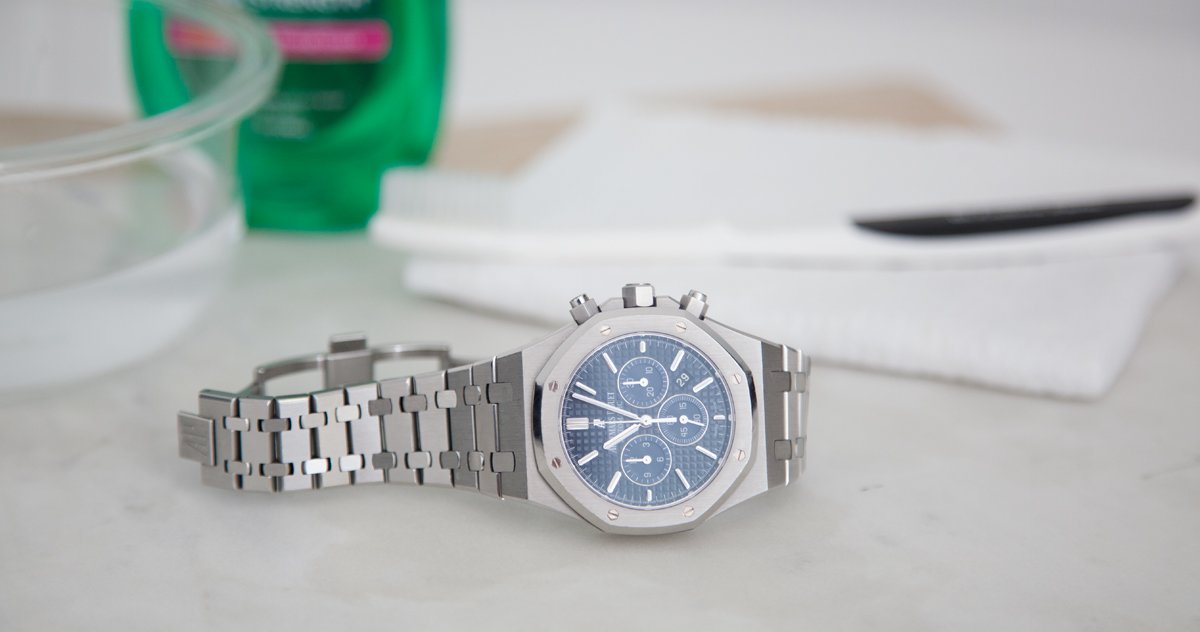
For water-resistant watches (typically 50 meters and above), you can use a gentle soap solution. Mix a small amount of mild soap (like hand soap or Dawn-brand dish soap) with warm water. Dip a soft-bristled toothbrush or a dedicated detail brush into the solution and gently scrub the watch case and bracelet, paying special attention to areas around hinges, corners, and the clasp mechanism.
Visuals
- Use images or diagrams to show how to access hard-to-reach areas like the inner lugs and caseback seam.
Common Mistakes
- Avoid using harsh chemicals or abrasive materials that can damage the watch’s seals or scratch the case.
- Do not rub the watch dry; instead, pat it dry with a soft towel or microfiber cloth to prevent scratching.
Step 4: Rinse and Dry the Watch
Rinse the watch under clean, room temperature water to remove any soap residue. Gently pat the watch dry with a soft towel or microfiber cloth. For any remaining water spots, use a dry microfiber cloth to wipe down the watch.
Additional Tips
- If the watch has a rotating bezel, ensure to rotate it while rinsing to clean underneath.
- For leather straps, use a slightly damp cloth to remove surface debris without rubbings too hard.
Step 5: Final Touches
Once the watch is dry, use a microfiber cloth to give it a final wipe-down. This will remove any new dust and give the watch a polished finish. For metal bracelets, you can also use a silicone-based spray to lubricate and protect the links.
Additional Tips
Maintenance
- Regularly cleaning your watch can help maintain its appearance and functionality. Use a microfiber cloth to wipe down the watch daily to remove fingerprints and dust.
- For leather straps, use a leather conditioner periodically to keep the material soft and supple.
Resources
- Use specific cleaning tools like a Cape Cod Detail Brush, microfiber cloths, and sanitary wipes to ensure effective cleaning without damage.
- For watches that require more thorough cleaning, consider using a sonic cleaner, but ensure it is suitable for your watch’s water resistance level.
Frequently Asked Questions (FAQs)
- What if my watch is not water-resistant?
- For watches with little to no water resistance, use a soft, lightly damp cloth to clean the exterior. Avoid any soap or water that could ingress into the watch.
- Can I use harsh chemicals to clean my watch?
- No, harsh chemicals should be avoided as they can damage the watch’s seals or harm the materials. Stick to mild soap solutions and gentle cleaning methods.
- How often should I clean my watch?
- Clean your watch regularly, especially if you wear it daily. A quick wipe-down with a microfiber cloth can make a significant difference in its appearance and hygiene.
Conclusion
Cleaning your watch is a straightforward process that requires attention to detail and the right tools. By following these steps, you can keep your watch looking its best while ensuring its longevity. Remember, professional cleaning is always the most thorough option, but for routine maintenance, these home cleaning methods are effective and safe.
Take the t.mes to clean your watch regularly, and if you’re unsure about any aspect of the process, consider consulting a professional watchmaker. With proper care, your watch will remain a reliable and stylish companion for years to come.